Pectinase vs Pectinolytic Enzyme Complex: Buyer Terminology Guide | Pellucid Works
Clarify the difference between pectinase and pectinolytic enzyme complexes, including polygalacturonase, pectin lyase, pectin methylesterase, and how to specify performance for juice, wine, and ingredient processing.
Pectinase vs Pectinolytic Enzyme Complex: What Buyers Should Know
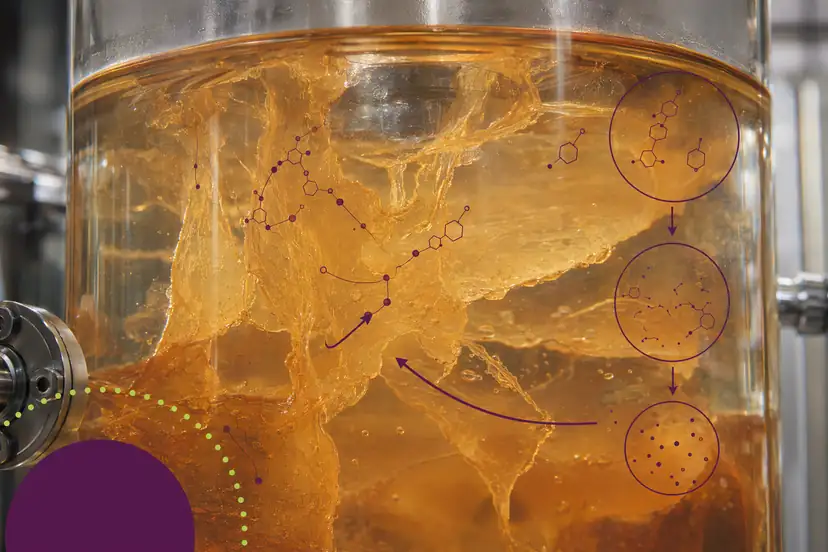
For industrial buyers, “pectinase” is not always a single, narrowly defined enzyme. In commercial use, the term often points to a family of pectin-degrading activities, or to a formulated blend built to break down pectin-rich plant material under real process conditions.
That distinction matters when you are buying for juice clarification, wine maceration, fruit preparation, plant-based ingredient extraction, or waste-stream processing. A product described simply as pectinase may behave very differently from a pectinolytic enzyme complex designed with multiple complementary functions.
At Pellucid Works, we use terminology with process intent: clear enough for procurement, specific enough for formulation teams, and practical enough for production trials.
Short answer
Pectinase is a broad commercial term for enzymes that degrade pectin.
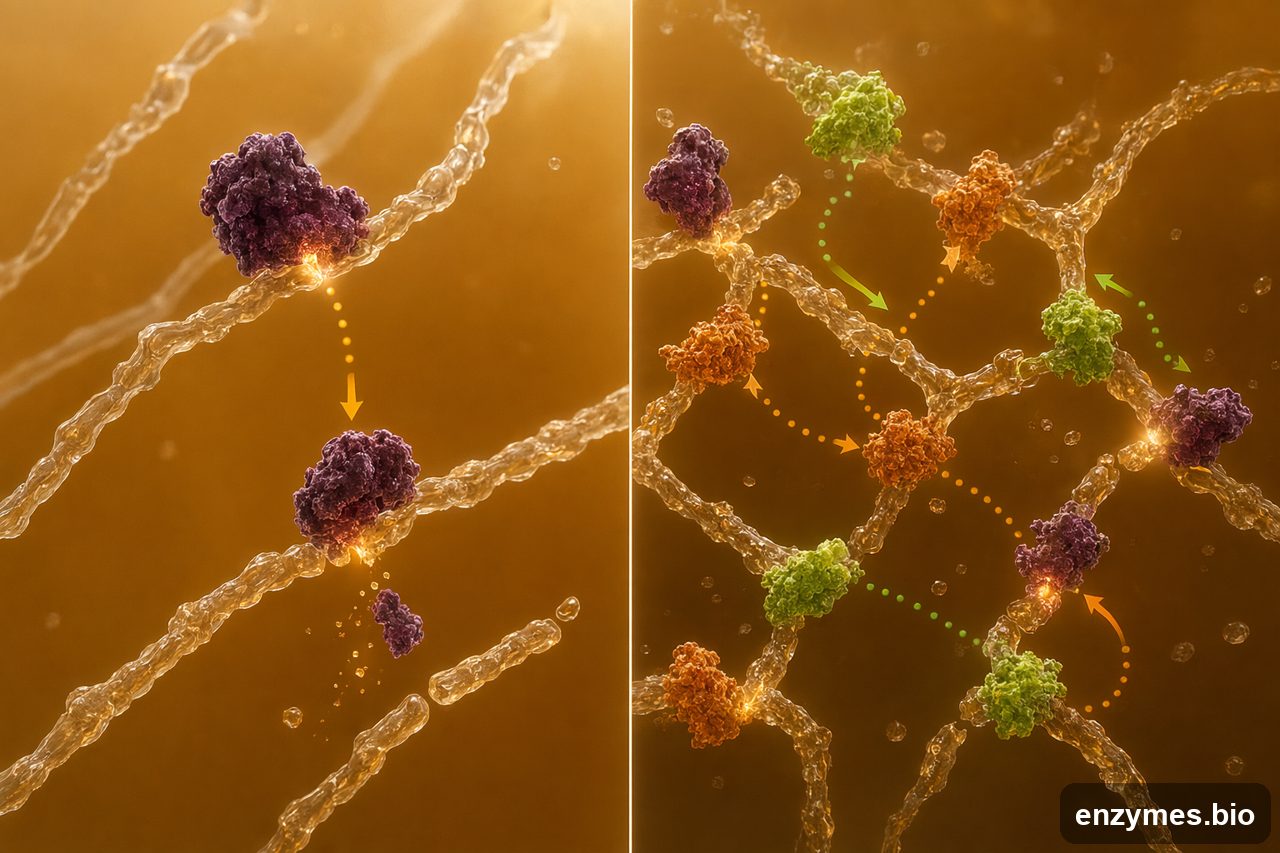
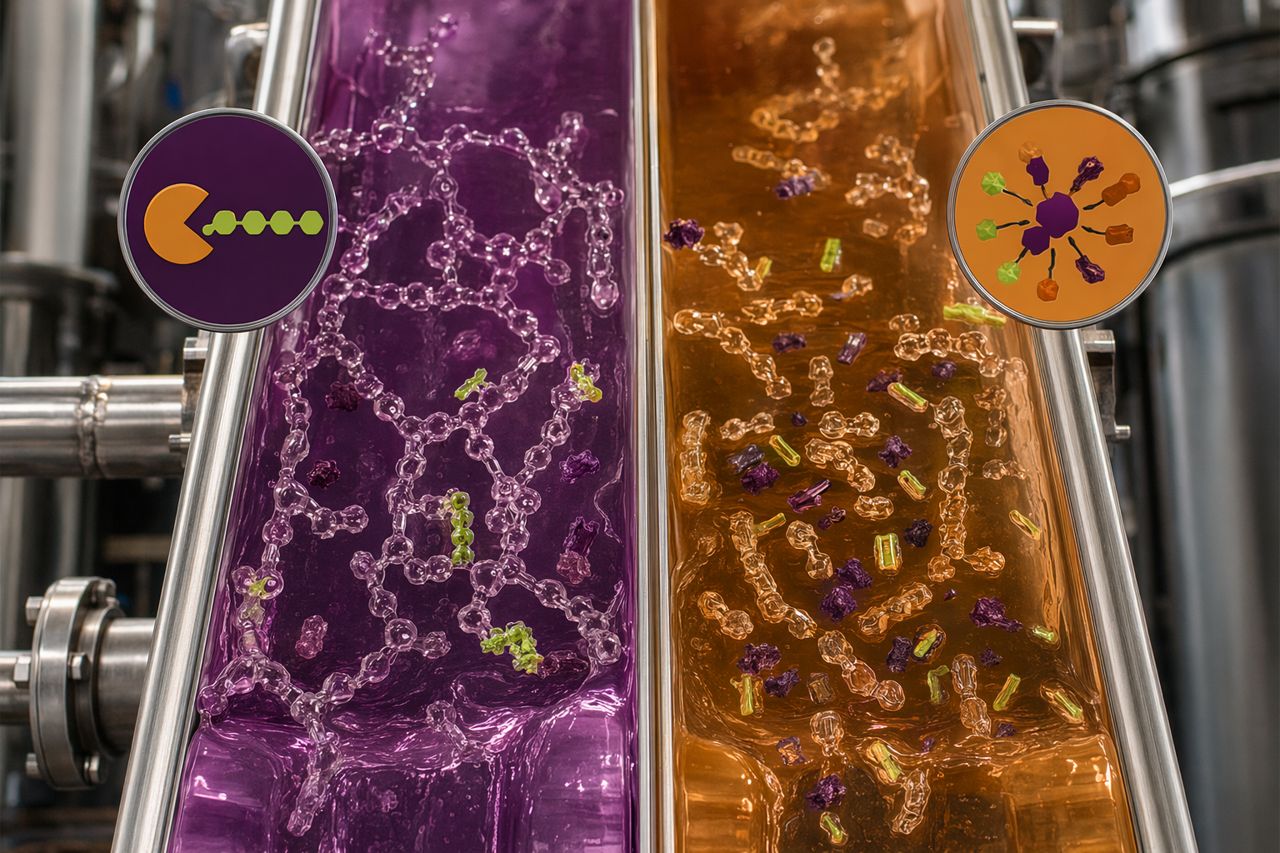
Pectinolytic enzyme complex usually means a blend of pectin-degrading functions that work together on different parts of the pectin structure.
In buyer language:
If the process only needs viscosity reduction or clarification, a targeted pectinase may be sufficient.
If the substrate is variable, pulpy, high-solids, or structurally complex, a pectinolytic complex may deliver more complete breakdown.
If the purchase specification only says “pectinase,” it may not describe the functional profile you actually need.
What “pectinase” typically means
Pectin is a structural polysaccharide found in plant cell walls, especially in fruits, pomace, peels, and vegetable tissues. It contributes to gel formation, pulp stability, viscosity, haze, pressing resistance, and extraction losses.
A pectinase preparation is used to reduce those effects by modifying or breaking pectin. In commercial discussions, however, “pectinase” can refer to several different enzyme functions, including:
Polygalacturonase, which cleaves pectic acid chains and helps reduce viscosity.
Pectin lyase, which splits highly esterified pectin and can be important in fruit processing.
Pectate lyase, which acts on de-esterified pectin structures.
Pectin methylesterase, which removes methyl groups and changes how pectin responds to other enzymes.
Supporting side activities that improve access to pectin embedded in plant tissue.
Because these activities do not behave identically, the label “pectinase” alone does not tell you how the product will perform in your material.
What a pectinolytic enzyme complex means
A pectinolytic enzyme complex is a more process-oriented term. It usually indicates a preparation containing multiple pectin-degrading functions, selected to act across a broader range of pectin structures.
This is especially relevant when the feedstock is not uniform. Apple mash, grape must, berry pulp, citrus peel, tropical fruit puree, and vegetable fiber systems all present different pectin architecture. Degree of esterification, particle size, soluble solids, temperature profile, and contact time can all change the outcome.
A complex can be designed to support:
Faster pulp breakdown
Lower viscosity
Better pressing or decanting behavior
Improved clarification kinetics
Increased juice or extract release
Reduced sludge or sediment burden
More predictable processing across seasonal raw-material variation
The practical advantage is not that “more enzymes” are automatically better. The advantage is functional coverage: the right combination of pectinolytic actions for the substrate and process target.
Key pectin-degrading functions buyers should recognize
Polygalacturonase
Polygalacturonase acts on the galacturonic acid backbone of pectin. It is often associated with viscosity reduction, liquefaction, and improved separation. For many juice and fruit-processing applications, it is one of the most important pectinolytic functions to understand.
Pectin lyase
Pectin lyase acts on methyl-esterified pectin. It can be valuable in fruit systems where pectin remains highly esterified and where rapid structural opening is needed without depending entirely on prior de-esterification.
Pectate lyase
Pectate lyase acts more effectively on lower-ester or de-esterified pectin structures. It is commonly discussed in processes where pectin methylesterase activity has already modified the substrate or where the raw material naturally contains more accessible pectate regions.
Pectin methylesterase
Pectin methylesterase does not simply “break pectin” in the same way as chain-cleaving enzymes. It changes pectin chemistry by removing methyl groups. That can make pectin more accessible to certain enzymes, but it can also affect gel behavior. For this reason, its presence should be considered deliberately, not assumed to be neutral.
Accessory hemicellulase and cellulase activities
Some commercial pectinolytic complexes include carefully controlled accessory activities that help open plant cell-wall structure. These are not always required, and they should be specified according to the application. In fruit and ingredient processing, controlled accessory activity can improve release; in other applications, excessive side activity may be undesirable.
Why terminology matters in purchasing
A buying team may ask for “pectinase” because that is the familiar name. A production team may need something more specific: a pectinolytic profile that works in a defined matrix, within a defined process window, with a measurable outcome.
The gap between those two requirements can cause avoidable issues:
Product samples that do not match plant conditions
Slow clarification despite acceptable lab notes
Good performance in one fruit type but weak performance in another
Unexpected texture changes in puree or fruit preparation
Overprocessing when the enzyme profile is too broad
Underperformance when the product lacks the needed pectin-degrading function
A stronger procurement specification describes the job to be done, not just the enzyme category.
Pectinase vs pectinolytic complex: practical comparison
Buyer question
“Pectinase” may mean
“Pectinolytic enzyme complex” may mean
Is it one enzyme or several?
Could be a single dominant activity or a blend
Usually a blend with multiple complementary functions
Is the activity profile obvious from the name?
No
More likely to be discussed as a profile, but still needs confirmation
Functional balance, side activities, compatibility with end product
Application notes by process type
Juice clarification
In apple, berry, tropical fruit, and blended juice systems, pectin can stabilize haze and hold suspended solids. Pectinase or a pectinolytic complex is selected to open the gel network, reduce viscosity, and improve separation. The right choice depends on fruit type, pulp load, treatment stage, and whether the processor is prioritizing yield, clarity, throughput, or filtration efficiency.
Wine and grape processing
In grape must and wine operations, pectinolytic enzymes may support maceration, pressing, settling, and clarification. Selection should consider grape variety, skin contact strategy, temperature profile, and the desired balance between extraction and clean separation.
Fruit preparation and puree handling
For jams, fillings, fruit bases, and puree streams, the objective is not always maximum breakdown. Sometimes the target is controlled viscosity adjustment while preserving texture. This is where understanding the balance between polygalacturonase, lyase, esterase, and accessory activities becomes commercially important.
Ingredient extraction from plant materials
Pectin can trap soluble components and limit extraction efficiency in pomace, peel, and plant-fiber streams. A pectinolytic complex may improve release and downstream separation, especially when pectin is integrated with cellulose and hemicellulose structures.
How to specify pectinase without overexposing your formulation
You do not need to disclose a confidential formula to get a useful recommendation. You do need to describe the operating problem clearly.
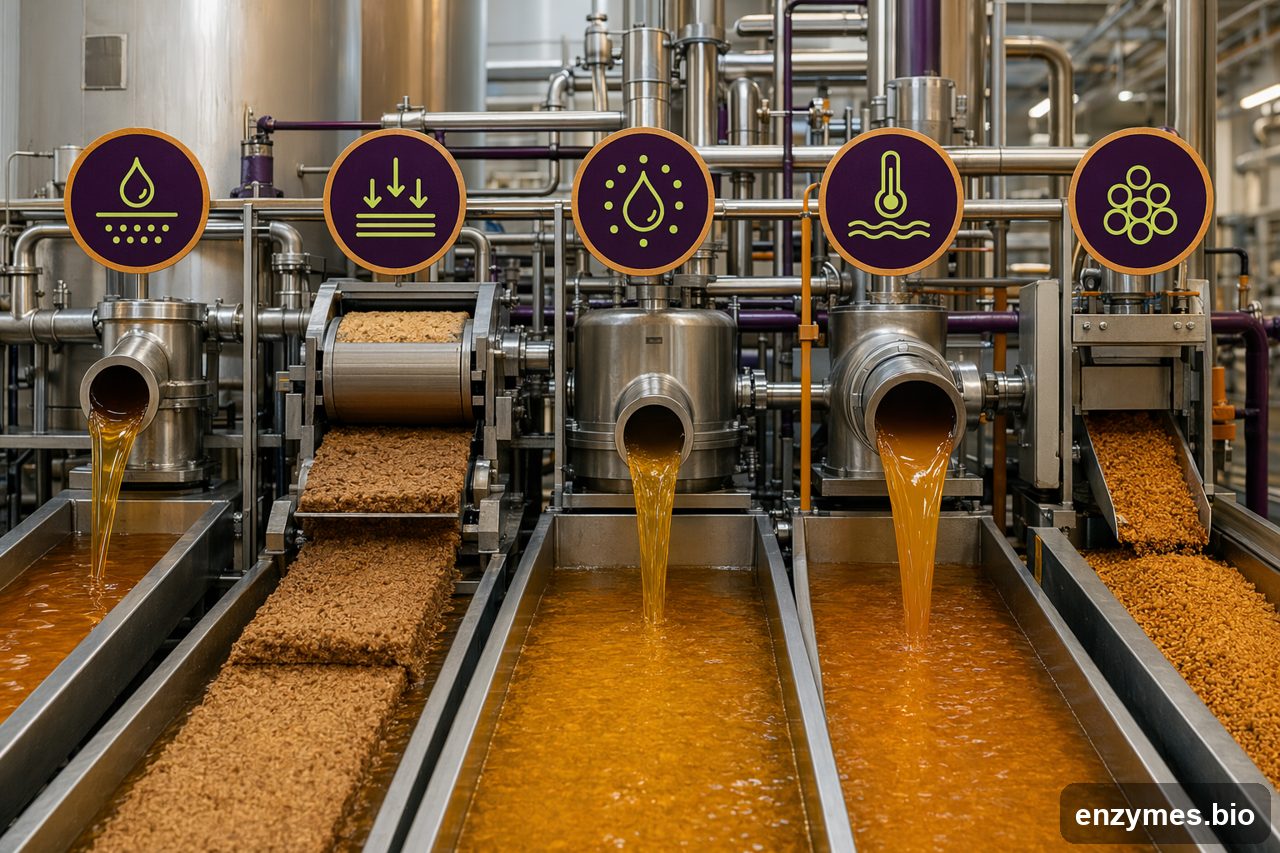
Useful specification inputs include:
Substrate type and seasonal variability
Processing stage where the enzyme is added
Target outcome: clarification, viscosity reduction, pressing, liquefaction, extraction, or texture control
Approximate process temperature band
Approximate process pH band
Contact time available in production
Solids load and particle characteristics
Downstream separation method
Any limits on side activity or texture change
Required format preference, such as powder or liquid
Packaging, documentation, and compliance requirements
This gives technical teams enough context to recommend a functional pectinolytic profile without turning the discussion into an unnecessary disclosure exercise.
What to ask a supplier before sampling
Before you request material, ask questions that reveal whether the product is a fit for your process:
Is the preparation primarily a pectinase, or a broader pectinolytic complex?
Which pectin-degrading functions are emphasized?
Is pectin methylesterase present, limited, or intentionally controlled?
Are accessory cellulase or hemicellulase activities part of the design?
What substrate types has the product been positioned for?
What process conditions are recommended for evaluation?
What performance indicators should be monitored during trials?
What documentation is available for industrial purchasing and quality review?
The goal is not to collect a long technical dossier before sampling. The goal is to avoid testing the wrong tool.
Better language for RFQs and technical briefs
Instead of writing:
Need pectinase for fruit processing.
Use language such as:
Requesting a pectinolytic enzyme preparation for fruit pulp viscosity reduction and improved solid-liquid separation. Please indicate whether the product is a targeted pectinase or a broader pectinolytic complex, including the intended functional profile and recommended evaluation conditions.
For a clarification project:
Requesting a pectin-degrading enzyme for juice clarification where haze reduction, filtration behavior, and settling rate are the primary performance indicators.
For controlled texture work:
Requesting a pectinolytic preparation suitable for controlled viscosity adjustment in fruit preparation, with attention to avoiding excessive tissue breakdown.
This kind of wording gives suppliers a practical target while keeping proprietary process details protected.
Pellucid Works view
We treat pectinase as a process tool, not a generic label. The best fit depends on what the pectin is doing in your system: holding haze, increasing viscosity, trapping liquid, resisting pressing, or locking valuable components inside plant tissue.
A precise enzyme discussion should make the process clearer. It should identify the substrate, the pectin problem, the intended change, and the operating constraints. From there, the terminology becomes useful: pectinase for the category, pectinolytic complex for the functional architecture, and individual enzyme roles for technical selection.
Request a quote or technical fit review
If you are evaluating pectinase or a pectinolytic enzyme complex for juice, wine, fruit preparation, or ingredient processing, send the process context below. Pellucid Works will respond through our own quotation workflow.
Prefer a pricing-first conversation? Include forecast volume, destination market, preferred format, and documentation requirements so we can route the request cleanly.