Pectinase for Viscosity Reduction in Juice, Wine, and Fruit Processing
Learn how pectinase reduces pulp viscosity, improves pumpability, supports filtration, and helps processors manage thick fruit mashes with a controlled enzymatic step.
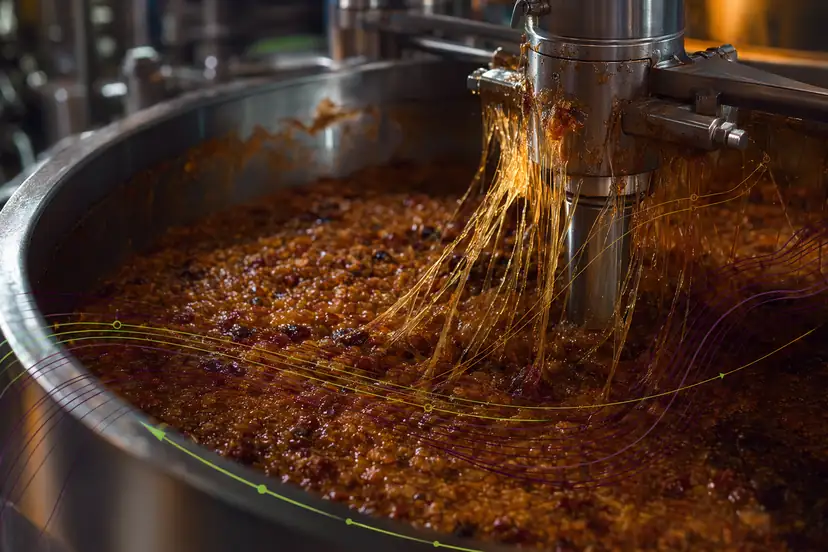
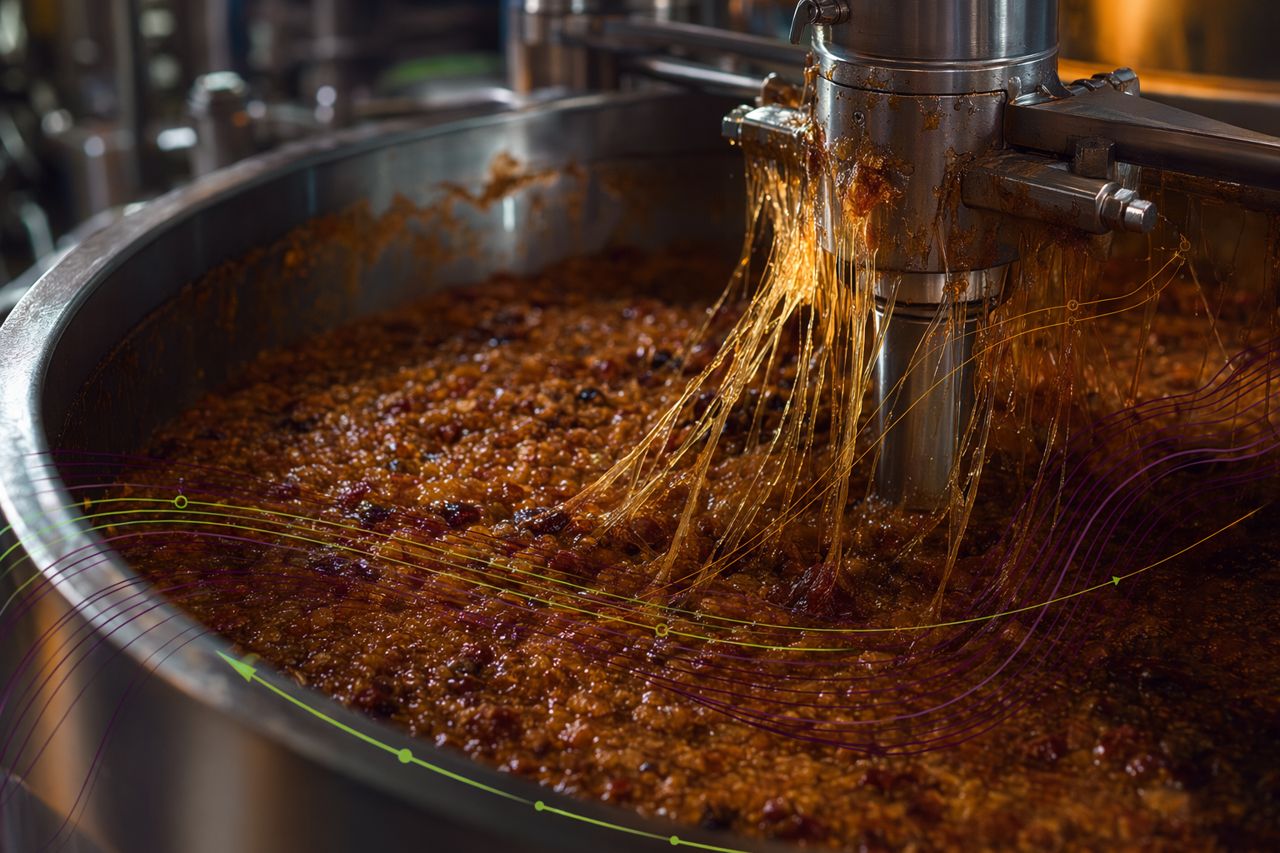
Thick fruit pulp is not just a handling nuisance. High pectin load can slow pumping, reduce press throughput, trap liquid in solids, overload clarification systems, and create inconsistent batches. Pectinase gives processors a controlled way to open that gel structure before it becomes a bottleneck.
At Pellucid Works, we position pectinase as a process tool: selected for substrate, addition point, residence time, temperature profile, and downstream separation goals. The target is not simply “more enzyme.” The target is a mash, must, juice, or extract that moves cleanly through the next operation.
Why fruit systems become hard to move
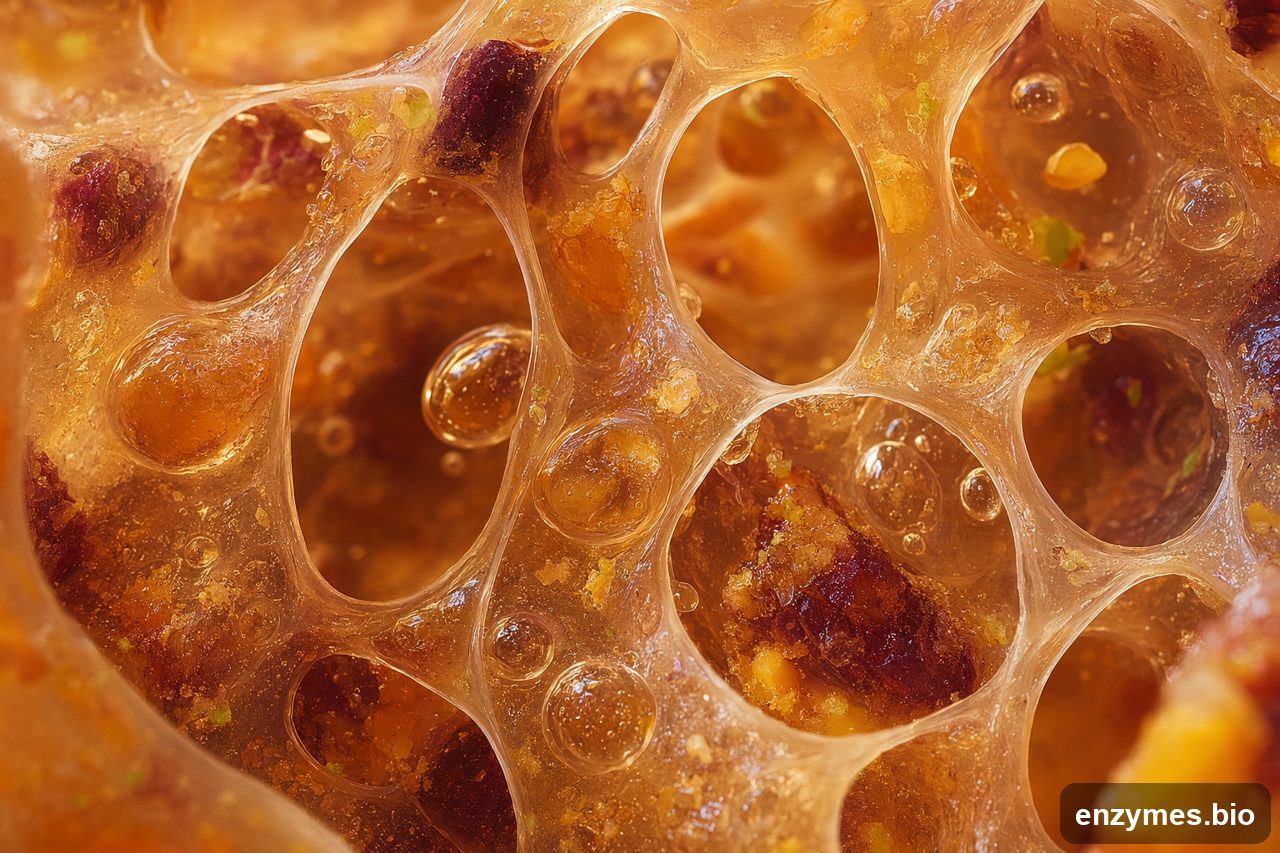
Pectin is a structural polysaccharide found in fruit cell walls and middle lamella. In processing, it can hydrate into a tangled network that binds water, suspends fine solids, and increases apparent viscosity. This is especially visible in apple, berry, tropical fruit, stone fruit, grape must, citrus side streams, and fruit ingredient slurries.
When pectin remains intact, processors may see:
Slow transfer from tanks, bins, or macerators
Higher pump load and unstable flow
Poor press drainage
Reduced free-run juice recovery
Hazy or slow-settling juice
Premature filter blinding
Inconsistent concentration or evaporation behavior
Solids that carry too much recoverable liquid
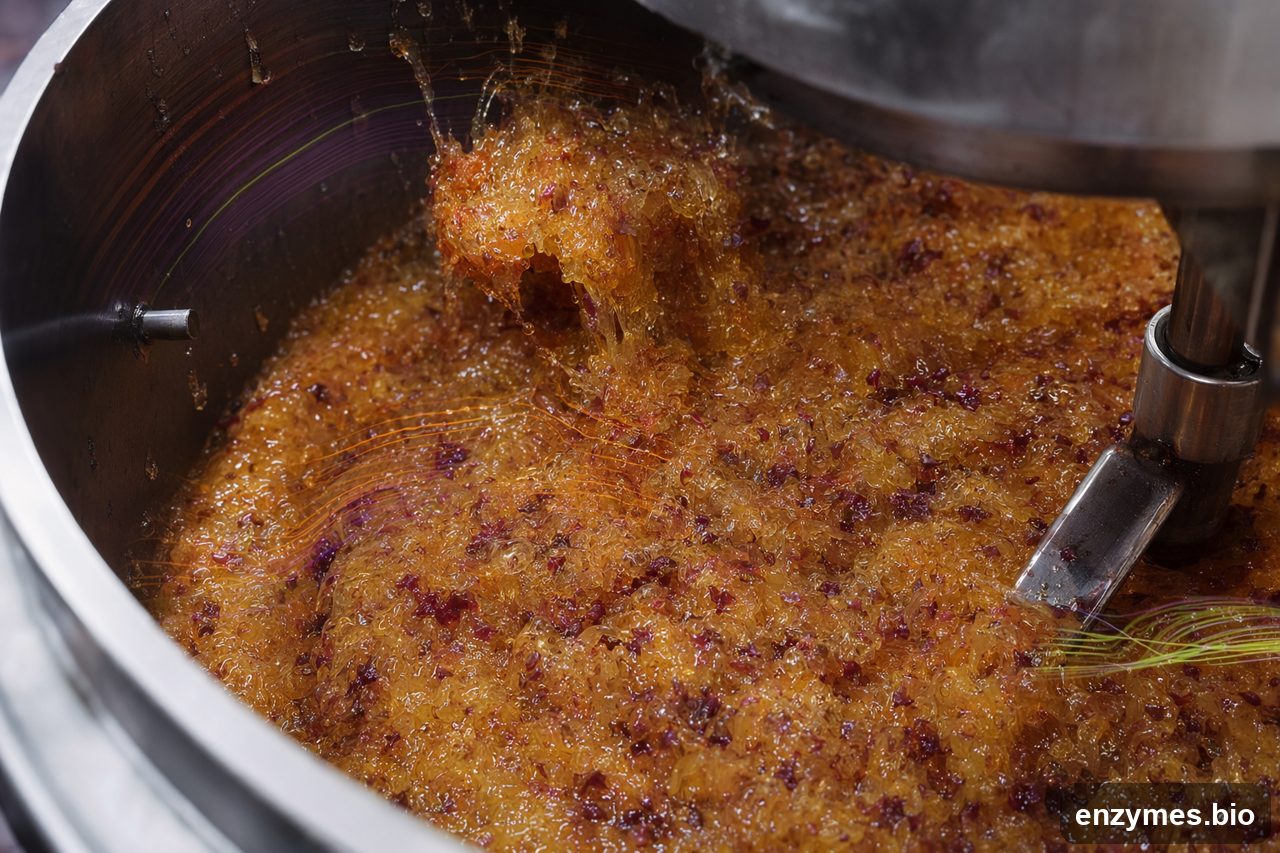
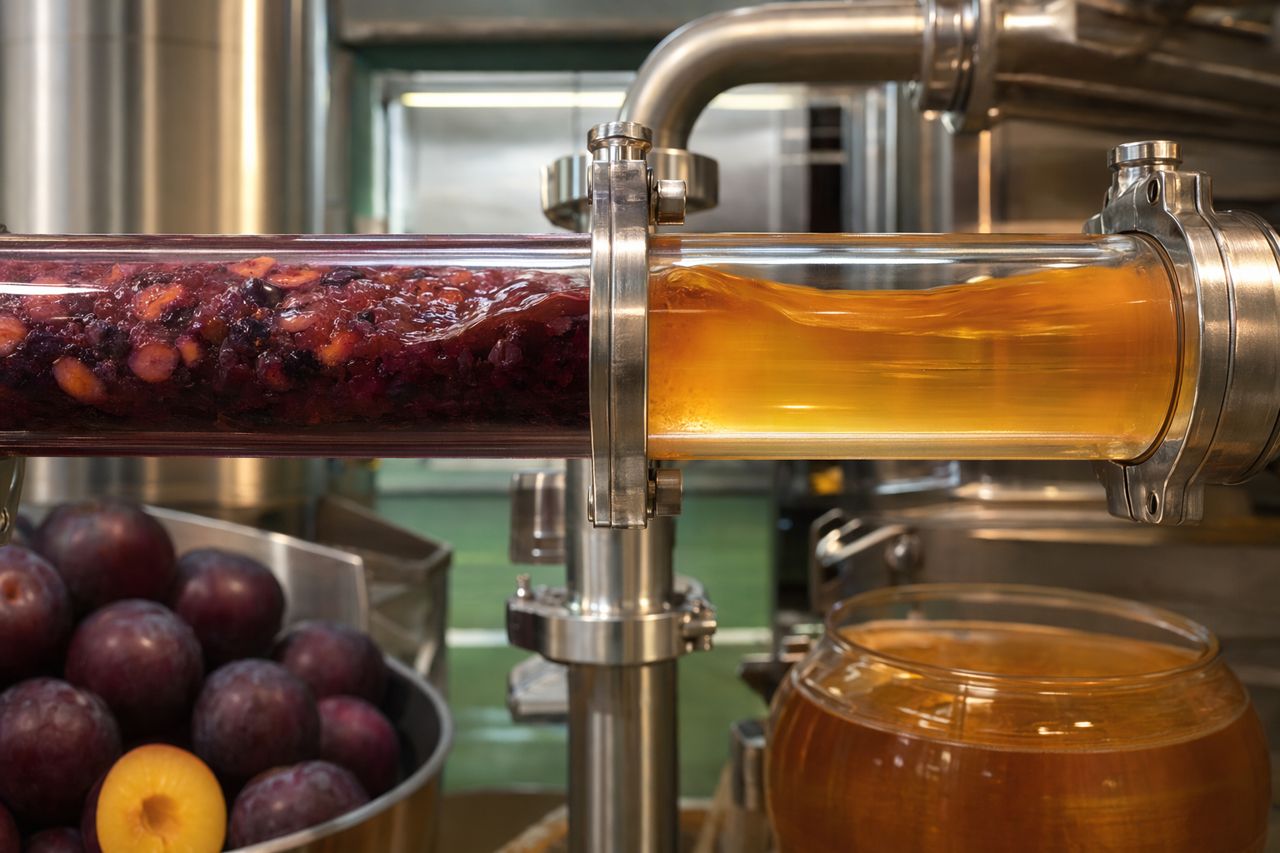
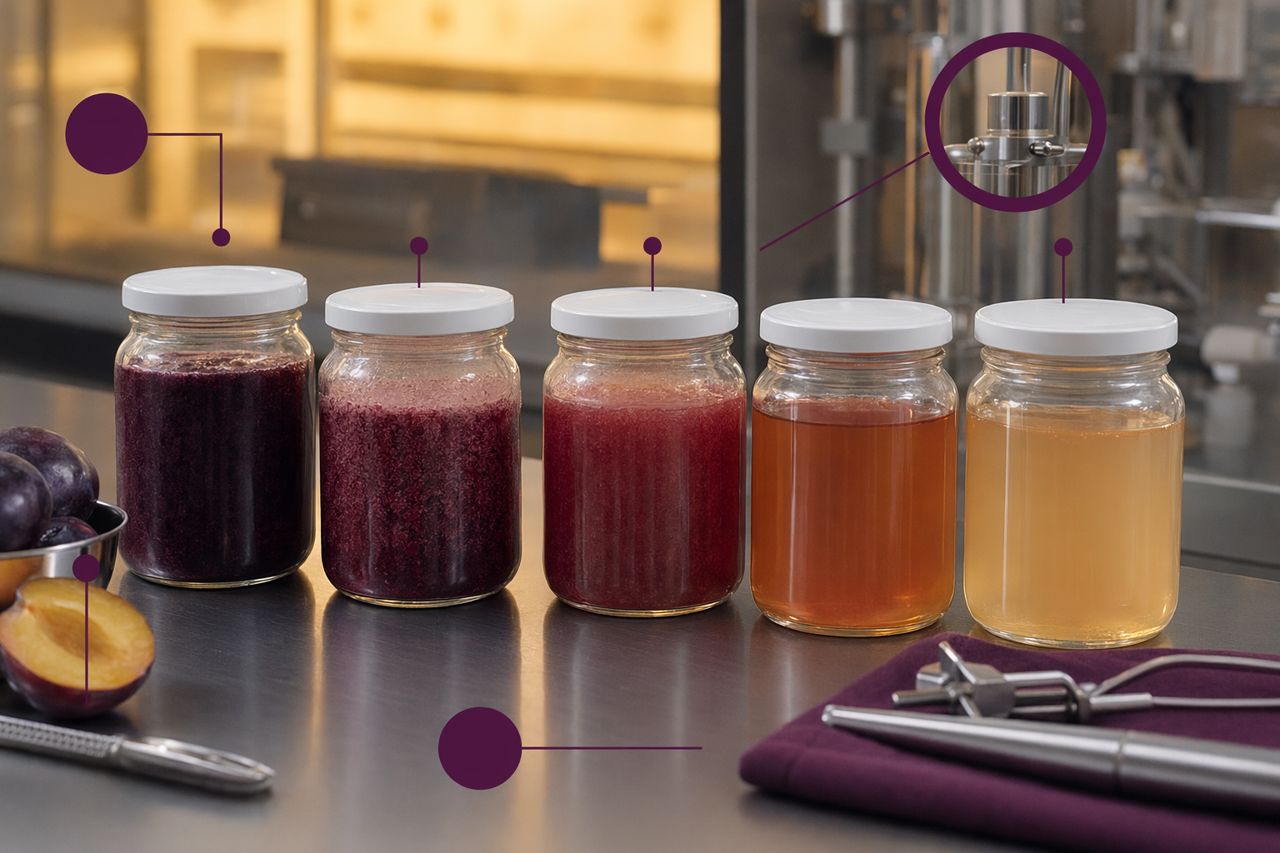
Pectinase helps convert that elastic, water-holding network into a lower-viscosity liquid phase that separates more predictably.
What pectinase changes in the process
Pectinase is a pectinolytic enzyme system that breaks down pectin structures in fruit-based materials. In viscosity-reduction applications, the practical outcome is a measurable shift in flow behavior and separation performance.
Common process benefits include:
Lower pulp thickness: mash and puree systems become easier to mix, pump, and meter.
Improved drainage: press cakes release liquid more readily when pectin is partially degraded.
More consistent transfer: viscosity swings between lots are easier to manage.
Improved downstream efficiency: concentration, blending, and ingredient standardization become more stable.
For buyers, the commercial value is straightforward: less resistance in the line, fewer slowdowns, and better use of installed separation equipment.
Where pectinase is typically added
The best addition point depends on the material and the bottleneck you are trying to remove.
Mash or pulp treatment
For apple, berry, stone fruit, and tropical fruit systems, pectinase is often applied after crushing, grinding, or pulping. This gives the enzyme access to hydrated pectin before pressing, screening, or clarification.
Pre-press treatment
When press yield or press cycle time is the concern, pectinase can be used before pressing to reduce water binding and improve liquid release from solids.
Post-press clarification
For cloudy juice or extract streams, pectinase may be used after primary separation to reduce residual pectin that causes haze, slow settling, or filter load.
Wine and grape must handling
In grape processing, pectinase can support must depectinization, juice release, clarification, and smoother transfer before fermentation or stabilization steps. Selection should match grape condition, color extraction goals, and the cellar’s thermal schedule.
Fruit ingredient manufacturing
Puree, concentrate, flavor, color, and extract manufacturers use pectinase to improve slurry handling, separation, and solids-liquid balance while maintaining a defined process identity.
Process variables that decide performance
Pectinase performance depends on more than the product label. A successful viscosity-reduction program controls the whole treatment environment.
1. Pectin profile of the substrate
Apple pectin behaves differently from citrus, berry, grape, or tropical fruit pectin. Ripeness, cultivar, peel inclusion, particle size, heat history, and prior mechanical treatment all affect enzyme access.
2. Addition point
Earlier addition can improve access to intact plant tissue and reduce viscosity before pumping or pressing. Later addition may be better when the goal is polishing, clarification, or filtration support.
3. Contact time
Pectinase needs sufficient residence time in the right part of the process. Short contact may improve handling but leave residual pectin for filters. Longer contact may improve clarification, provided the schedule and product quality targets allow it.
4. Temperature and pH window
The enzyme should be matched to the plant’s operating conditions. If the process runs warm, cold, acidic, or variable, selection should account for the real production window rather than an ideal bench condition.
5. Mixing and solids distribution
Poor dispersion creates untreated pockets and inconsistent viscosity reduction. Pectinase should be introduced where it can distribute quickly without excessive shear damage to product quality targets.
6. Downstream inactivation or hold steps
If a heat step follows treatment, confirm that it fits the required process sequence. If the product moves directly to filtration, confirm the treatment is complete enough to protect filter performance.
What to monitor during trials
A good plant trial does not need to be complicated, but it should track the right indicators. For viscosity-reduction work, focus on operational signals that matter to production.
Recommended observations:
Time required to transfer a known batch volume
Pump load stability and cavitation risk
Press cycle behavior and cake release
Free liquid separation after holding
Clarity trend after settling or centrifugation
Filter run length before pressure rise
Solids moisture or liquid retention
Impact on color, aroma, mouthfeel, or ingredient specification
Compatibility with existing fining, filtration, or stabilization aids
The best result is not always the lowest possible viscosity. It is the viscosity profile that improves throughput without pushing the material outside specification.
Troubleshooting thick pulp and slow filtration
Production symptom
Likely pectin-related issue
Pectinase strategy
Mash is difficult to pump
Hydrated pectin network is holding water and suspending solids
Treat earlier in the pulp stage and verify dispersion
Press cycle is too long
Liquid remains bound in cell-wall material and gel structures
Add before pressing with enough residence time
Juice settles slowly
Residual pectin keeps fine solids suspended
Use a clarification-focused pectinase step after extraction
Filters blind quickly
Gel fragments and colloidal pectin load the filter surface
Improve depectinization before filtration
Batch-to-batch viscosity swings
Fruit maturity or peel/skin inclusion is changing pectin load
Adjust treatment based on raw material condition
Puree or slurry meters poorly
Apparent viscosity is too high for pumps or fillers
Validate a handling-focused pectinase program before transfer
Selecting a pectinase for viscosity reduction
For B2B purchasing, selection should begin with the bottleneck, not with a generic enzyme request. Tell us whether the main issue is pumping, press yield, clarification, filtration, puree handling, or extract recovery. The same enzyme family can be optimized differently depending on the plant goal.
Pellucid Works can support specification discussions around:
Fruit or botanical substrate
Mash, juice, must, puree, concentrate, or extract format
Current addition point and intended new addition point
Heating and holding sequence
Separation equipment used downstream
Target viscosity or operational improvement
Product quality constraints
Packaging, storage, and handling requirements
We keep the conversation practical: what the material is doing today, where the line is slowing down, and what a controlled pectinase step should change.
Request pricing or a process-fit quote
Use the form below to request pectinase pricing, availability, or a fit discussion for viscosity reduction. Include the substrate and the processing bottleneck so we can respond with a more useful recommendation.