Pectinase Troubleshooting Guide for Yield, Viscosity, Filtration, and Clarity
Process-focused troubleshooting guide for pectinase use in juice, wine, fruit prep, and ingredient manufacturing. Diagnose low yield, high viscosity, slow filtration, haze, and inconsistent clarification.
Pectinase is often specified for a simple outcome: loosen the fruit matrix, reduce pectin-driven viscosity, improve press yield, accelerate clarification, and make filtration less punishing. When performance drifts, the cause is rarely “bad enzyme” alone. It is usually a mismatch between substrate, contact conditions, enzyme spectrum, addition point, or downstream timing.
This guide is written for formulation teams, juice and wine processors, fruit-prep manufacturers, and industrial buyers who need a clear diagnostic path before changing suppliers, reformulating blends, or accepting lower throughput.
What pectinase is expected to solve
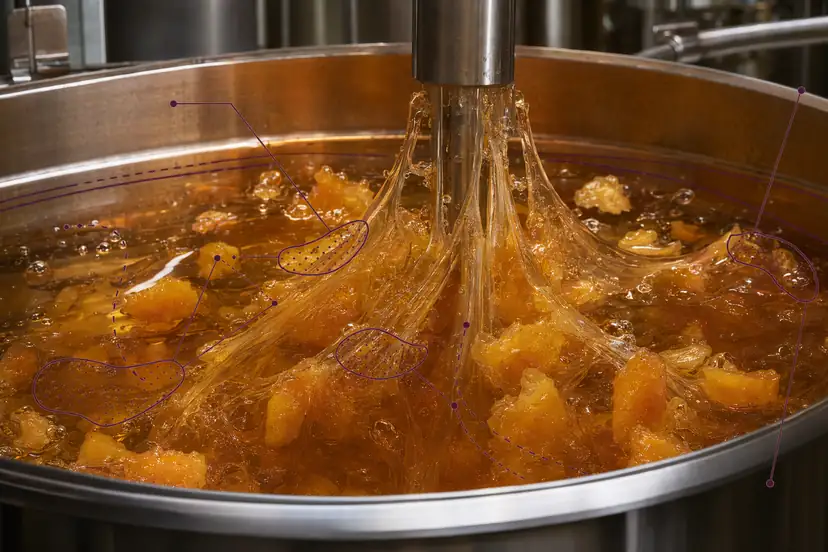
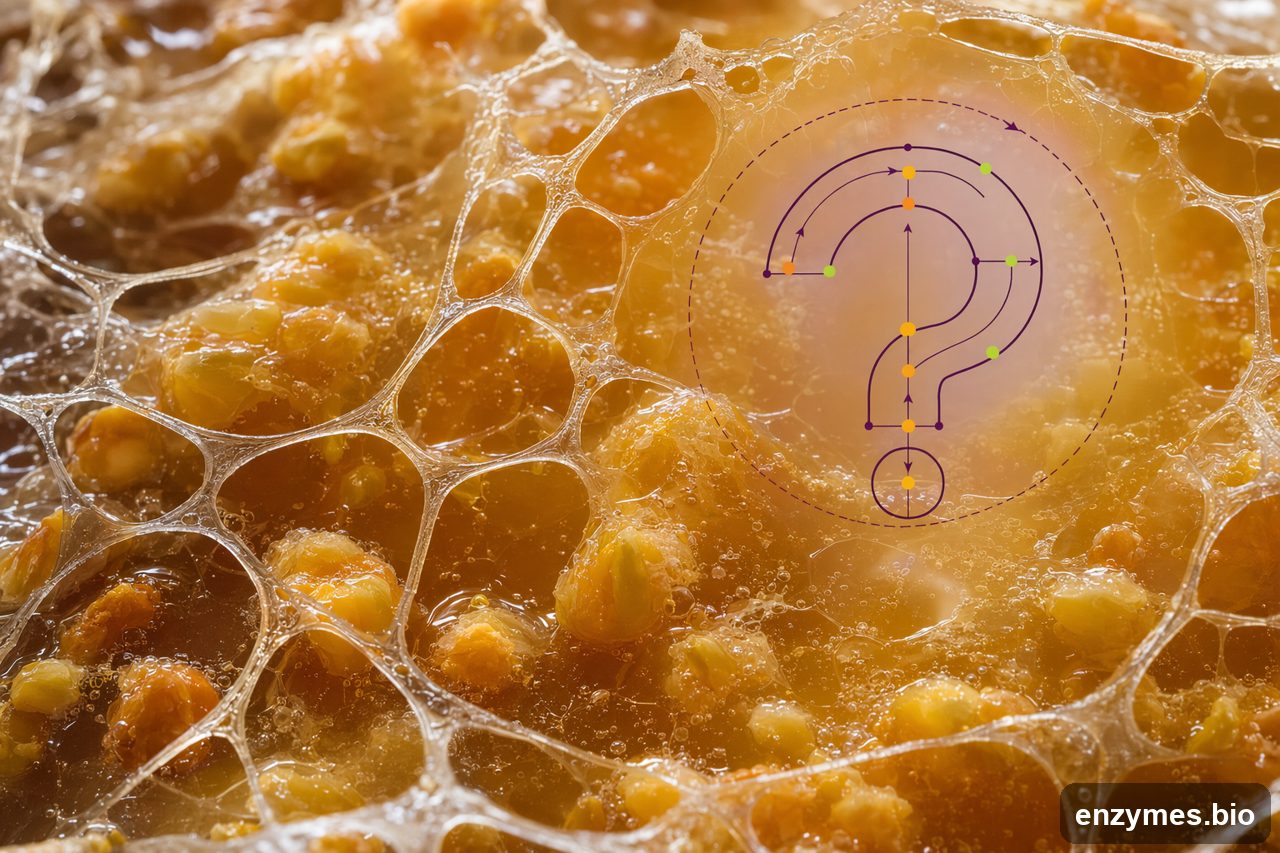
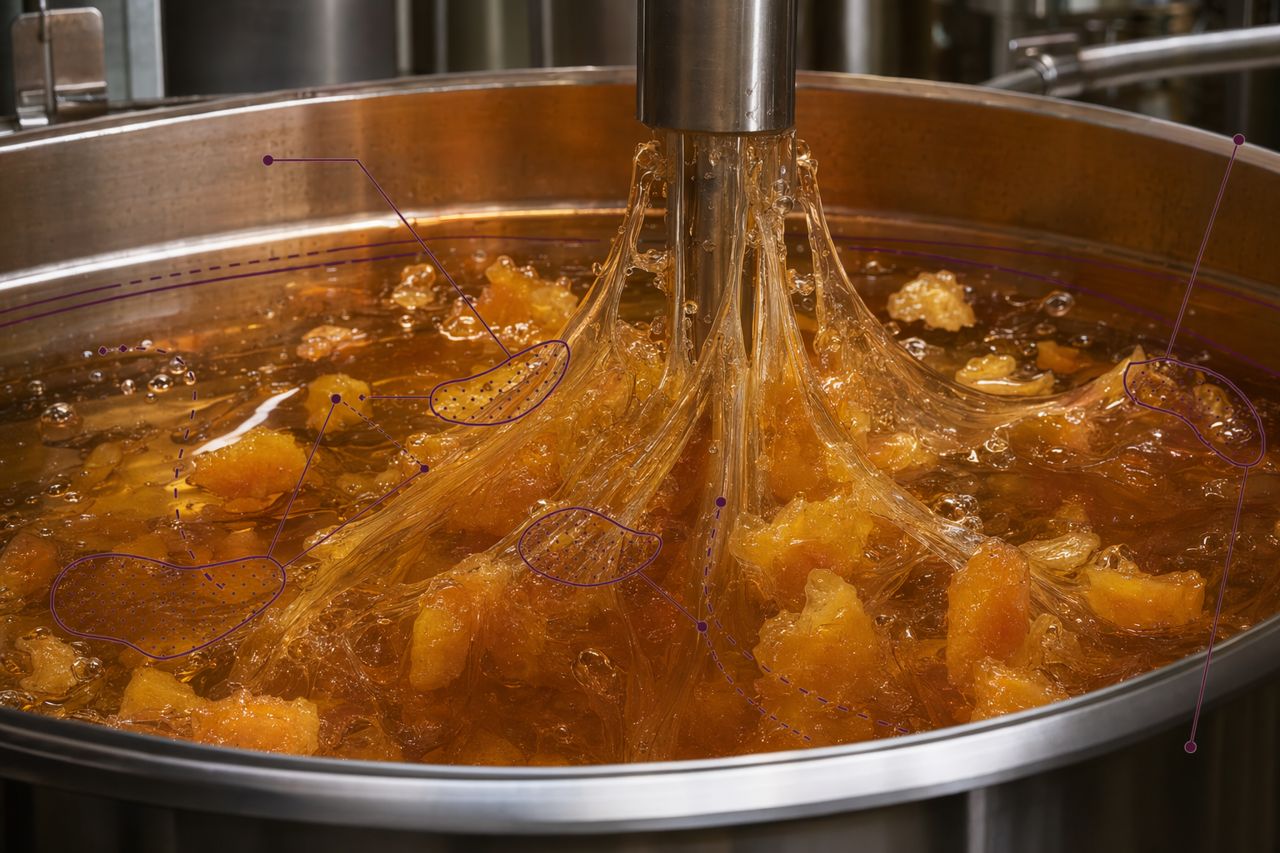
In fruit and plant-based processes, pectin forms hydrated gel networks that hold liquid, trap suspended solids, and create filter-clogging colloids. Pectinase, more accurately a pectinolytic enzyme system, breaks those networks into smaller, less viscous fragments.
Typical process objectives include:
Higher free-run or press yield from pulp, mash, pomace, or fruit slurry
Lower viscosity before clarification, evaporation, concentration, or blending
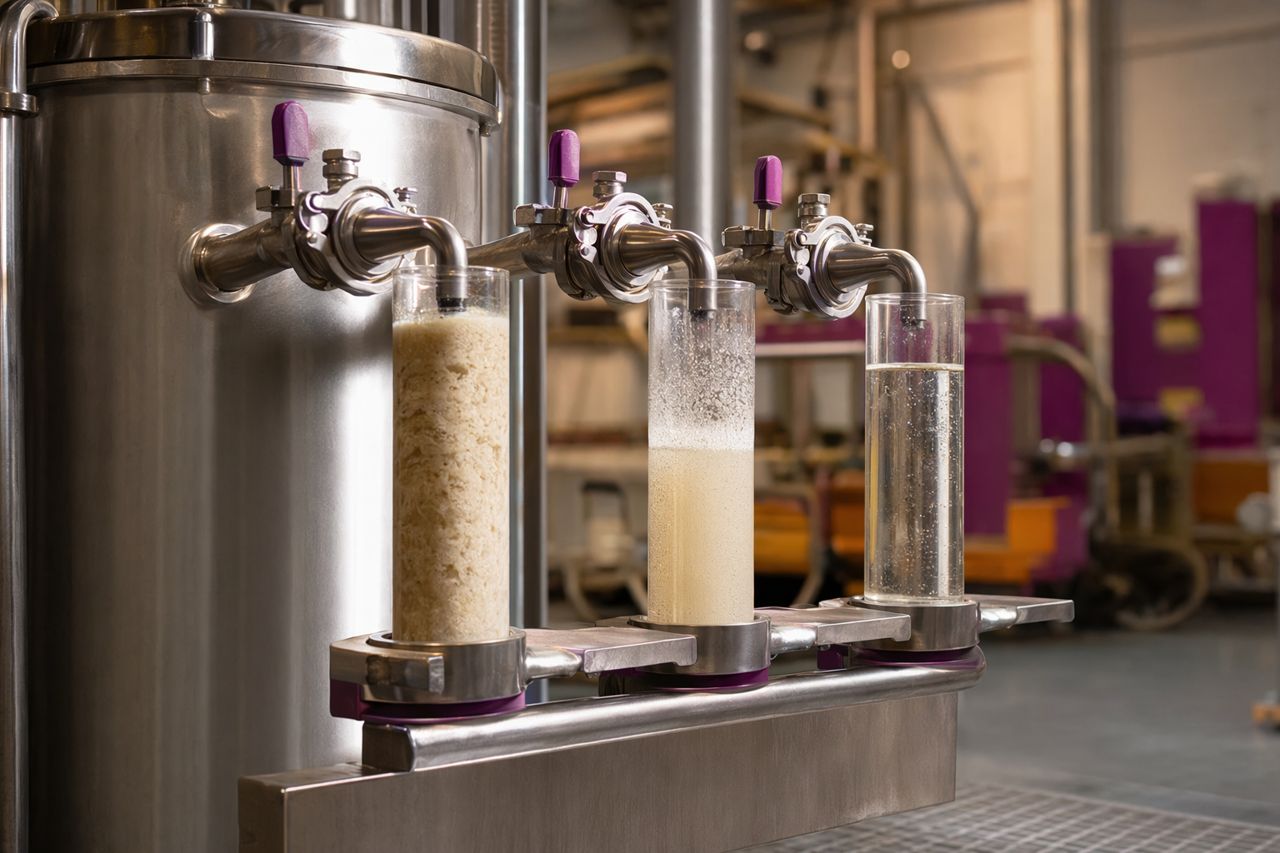
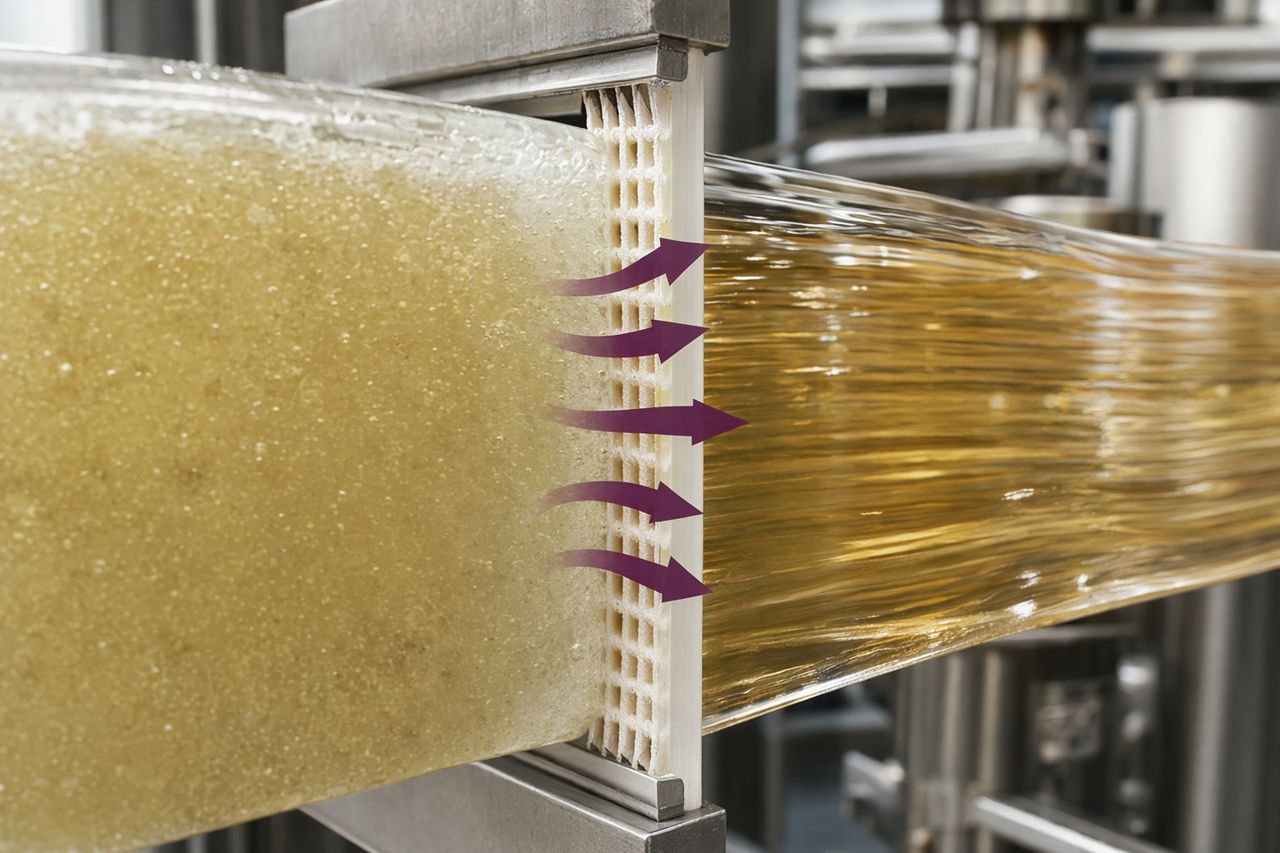
Faster settling, flotation, centrifugation, membrane flow, or depth filtration
More consistent clarity and reduced post-process haze risk
Improved extraction of soluble solids, color, or aroma precursors, depending on the fruit system
The right troubleshooting approach starts by identifying which outcome is failing.
Quick symptom map
Process symptom
Most likely causes to check first
What to verify
Low juice yield
Short contact time, poor enzyme distribution, high intact pectin load, incorrect addition point
Mixing, mash temperature profile, hold time, particle size, fruit maturity
High viscosity after treatment
Pectin load exceeds treatment window, enzyme spectrum mismatch, temperature or pH outside effective range
Substrate type, fruit variety, pulp solids, pH, heating sequence
Contact time, treatment temperature, downstream separation settings
Step 1: Confirm the problem is pectin-related
Not every filtration or haze problem is a pectin problem. Before escalating the treatment level, confirm that pectin is still contributing to the issue.
Practical checks:
Compare treated and untreated samples side by side. Hold raw material, dilution, temperature, and time constant.
Track viscosity trend, not just endpoint appearance. A sample can look visually similar while the flow behavior changes significantly.
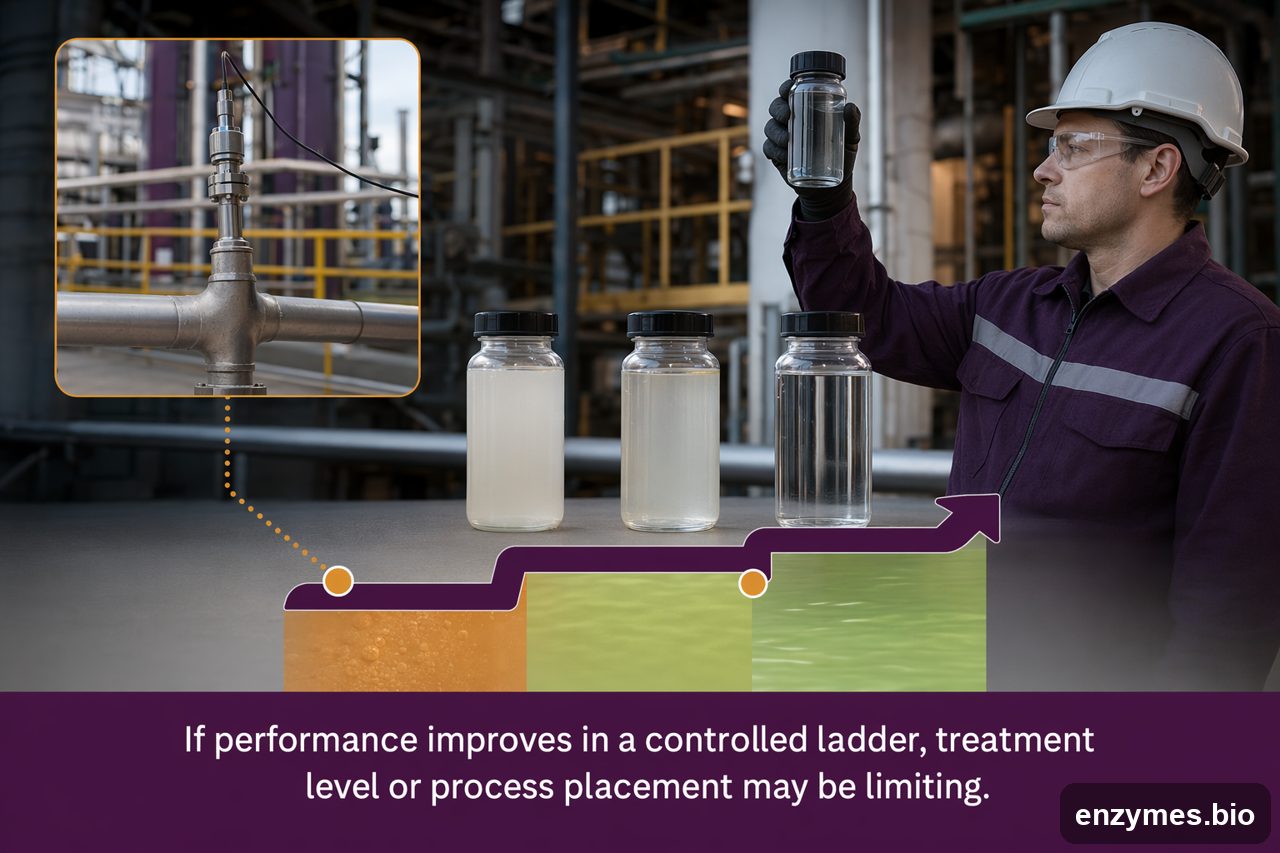
Run a small dose ladder using your plant addition basis. Keep all other variables locked. If performance improves progressively, pectin load or contact conditions are likely limiting.
Separate pectin effects from solids loading. Excess pulp carryover, fine seed particles, starch, or insoluble fiber can mimic enzyme underperformance.
Check sequence effects. Heat, alcohol, sulfite, fining agents, and bentonite-style treatments can alter enzyme performance or make results harder to interpret.
A clean troubleshooting trial changes one variable at a time. Pectinase problems become opaque when dose, temperature, hold time, mixing, and raw material all change together.
Step 2: Check addition point and distribution
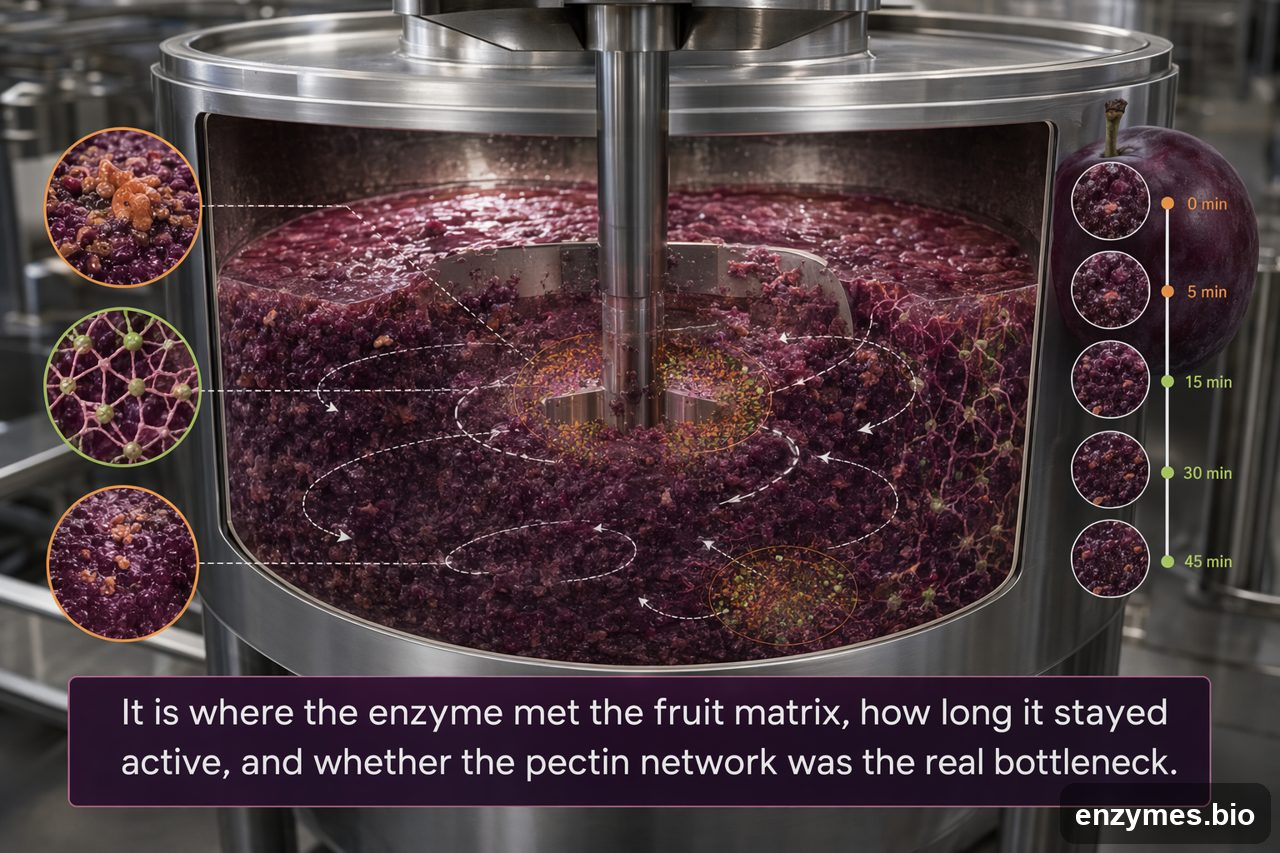
Pectinase must contact the pectin network. Performance drops when the enzyme is added too late, too locally, or into a matrix that is already too hot, too concentrated, or poorly mixed.
Common addition-point problems
Added after the pulp has already gelled or compacted. The enzyme cannot distribute evenly through dense solids.
Added into a high-shear pocket without bulk turnover. Local dilution looks fine, but the tank does not homogenize.
Added after heat exposure. Prior thermal steps may reduce activity before the enzyme reaches the substrate.
Added downstream of the real bottleneck. If the press, decanter, or holding tank is where viscosity is limiting, late addition may not rescue flow.
Better practice
Add when the fruit matrix is accessible and mobile.
Ensure enough bulk mixing for full enzyme contact without damaging the product target.
Pre-dilute only if your internal handling procedure supports even distribution and avoids localized extremes.
Record the exact process point, not just “enzyme added.”
Step 3: Validate contact time
Pectinase reactions are kinetic. A formulation that works in a beaker may underperform on the line if residence time is compressed, tanks are unevenly mixed, or production tempo changes.
Signs contact time is limiting:
Viscosity keeps falling after the sample has already moved downstream.
Filtration starts poorly but improves after unplanned holding.
Batch-to-batch clarity correlates with queue time rather than dosing record.
Press yield improves only during slower production days.
What to do:
Build a time-course sample set from the actual process stream.
Compare early, middle, and late tank samples to detect stratification.
If possible, move pectinase addition upstream rather than increasing treatment blindly.
Step 4: Review pH and temperature exposure
Pectinase products have defined operating windows. Outside the effective range, reaction rate and stability decline. The most common plant issue is not one incorrect setpoint; it is a hidden excursion.
Check for:
Hot transfer lines, heated jackets, pasteurization carryover, or steam-contact zones before the enzyme has completed its work
Cold fruit or refrigerated puree that slows reaction time
Acid adjustment before enzyme addition, especially when different fruit lots are blended
Alkaline cleaning residue or incomplete rinse affecting a small production volume
Tank gradients where the probe reads correctly but the bulk material is not uniform
Troubleshooting rule: verify the conditions the enzyme actually experiences, not only the recipe target.
Step 5: Match the enzyme spectrum to the substrate
“Pectinase” is a category, not a single universal tool. Commercial pectinolytic systems can differ in their balance of polygalacturonase, pectin lyase, pectin methylesterase, and supporting side-chain activities. That balance matters.
Where mismatch shows up
Apple and pear: persistent viscosity, slow press drainage, haze carryover
Berry and red fruit: high soluble pectin, color matrix interactions, seed and skin solids
Citrus: high pectin complexity, peel-derived colloids, bitterness-sensitive processing constraints
Grape and wine: extraction goals must be balanced against clarification, phenolic pickup, and downstream sensory targets
Fruit preparations and concentrates: high solids and low water mobility can restrict enzyme access
If the substrate changes, the enzyme system may need to change. A product that performs well in low-solids juice may not be the right choice for thick puree, concentrate, or high-skin-contact processing.
Troubleshooting low yield
Low yield usually means liquid is still being held inside a structured plant matrix or the press system is not receiving a material that can drain efficiently.
Likely causes
Coarse or inconsistent milling that leaves intact pectin-rich tissue
Enzyme added after pressing behavior has already been determined
Contact time too short before pressing or decanting
Mash temperature too low for the available residence time
Fruit maturity variation increasing pectin load
Enzyme spectrum not suited to the fruit type
Corrective actions
Sample mash before and after enzyme hold to confirm viscosity and free-liquid release.
Improve enzyme distribution before increasing addition level.
Move addition earlier if the process allows.
Run a small process-relevant ladder with fixed milling, temperature, and hold time.
Compare press cake moisture or retained soluble solids to distinguish enzyme limitations from mechanical limitations.
Troubleshooting high viscosity
High viscosity is one of the clearest indicators that the pectin network has not been sufficiently reduced. It can also block heat transfer, pumping, blending, and evaporation efficiency.
Likely causes
Under-treatment relative to pectin load
Short reaction window
Low bulk temperature slowing reaction
High soluble solids limiting mobility
Poor mixing in thick puree or concentrate
Pectinase not designed for the specific substrate structure
Corrective actions
Measure viscosity change over time rather than relying on a single endpoint.
Confirm that samples are representative; thick systems stratify easily.
Consider staged addition or earlier addition when high solids restrict contact.
Avoid adding pectinase only after concentration if the enzyme cannot distribute through the matrix.
Review whether a broader pectinolytic profile is needed.
Troubleshooting slow filtration
Slow filtration is often blamed on the filter, but pectin can be the invisible load that creates pressure rise, blinding, and short run lengths.
Likely causes
Residual soluble pectin after treatment
Fine suspended solids not removed before final filtration
Protein, starch, gum, or tannin interactions creating mixed colloids
Insufficient clarification hold after enzymatic treatment
Overloaded filter stage because upstream separation is doing too little
Corrective actions
Test whether treated material continues to clarify with additional hold time.
Compare turbidity and filterability before and after pectinase treatment.
Check whether filtration improves when solids are reduced mechanically before the final filter.
Review fining and clarification sequence; some aids work better after pectin reduction.
Avoid solving residual pectin by increasing filter area alone. That shifts cost without fixing the matrix.
Troubleshooting inconsistent clarity
Inconsistent clarity usually points to variation: raw material, process timing, tank turnover, or downstream treatment sequence.
Likely causes
Fruit variety or maturity changes between lots
Frozen or thawed raw material releasing pectin unevenly
Nonuniform enzyme distribution in large tanks
Heat exposure before reaction completion
Incomplete settling or centrifugation after treatment
Blend components with different colloid behavior
Corrective actions
Segment incoming raw material by fruit type, maturity, and storage history.
Track clarity against process time and temperature, not only addition amount.
Pull samples from top, middle, and bottom zones in large vessels.
Check final blend stability after all components are combined.
Standardize the clarification hold before final filtration.
When more pectinase is not the best fix
Increasing the treatment level can help when pectin load is truly higher than expected. It will not solve every failure mode.
More enzyme may not fix:
Poor distribution in dense pulp
Insufficient residence time
Heat exposure before reaction completion
Filter blinding from non-pectin solids
Raw material variability without process adjustment
A formulation that lacks the needed pectinolytic spectrum
In these cases, better process placement or a better-matched enzyme profile is usually more effective than simply escalating input.
Plant trial structure for pectinase troubleshooting
Use a controlled trial format before making a supplier or formulation decision.
Recommended trial design
Define the bottleneck. Yield, viscosity, filtration, clarity, or stability.
Lock the substrate. Same fruit lot, same solids level, same dilution or blend ratio.
Lock the process. Same temperature path, hold time, mixing, and downstream equipment.
Run a controlled addition ladder. Use your plant’s normal addition basis; do not change multiple variables at once.
Sample at timed intervals. Track the curve, not only the final reading.
Document the winning condition. Include addition point, process window, contact time, and downstream sequence.
The best trial output is a process recommendation, not just a pass/fail enzyme comparison.
Specification questions for buyers
When sourcing pectinase for a production environment, ask questions that connect the enzyme to your process rather than only to a catalog description.
Useful buyer questions:
Which fruit systems and solids levels is the enzyme designed for?
Is it optimized for mash treatment, clarification, maceration, extraction, or filterability?
How sensitive is performance to pH, temperature, alcohol, or high soluble solids?
Does the profile favor rapid viscosity reduction, press yield, clarification, or extraction?
What process placement is recommended for thick pulp, juice, wine, puree, or concentrate?
What handling format best fits our plant: liquid, powder, or custom-prepared blend?
Can we run a structured trial against our existing bottleneck?
A good pectinase recommendation should describe where the enzyme enters the process, what it changes, and how success will be measured.
Request pricing or a process-fit quote
Pellucid Works supports industrial buyers evaluating pectinase for juice, wine, fruit preparations, concentrates, and ingredient manufacturing. Share your substrate, process bottleneck, and target outcome, and our team will respond with a process-fit recommendation and pricing path.
Embedded explainer video
A one-minute faceless explainer accompanies this page, showing how pectin networks trap liquid and why troubleshooting must connect enzyme profile, contact conditions, and downstream separation. The visual style uses translucent amber pulp structures, plum technical overlays, and smooth clarified flow fields to match the Pellucid Works process language.