Pectinase Conditions: pH, Temperature, Time, and Substrate Factors
Practical processing guidance for pectinase performance across pH, temperature, contact time, pulp character, and clarification conditions in juice, wine, and ingredient production.
Pectinase Conditions: pH, Temperature, Time, and Substrate Factors
Pectinase performance is not controlled by dosage alone. In juice, wine, fruit prep, and plant ingredient processing, the result depends on how the enzyme meets the pectin structure: acidity, heat history, contact time, pulp loading, soluble solids, particle size, and the way the batch is mixed.
Pellucid Works supplies Pectinase (Pectinolytic Enzyme) for industrial buyers who need predictable viscosity reduction, clarification support, pressing efficiency, and cleaner downstream separation. This guide outlines the main process variables formulation teams should confirm before scale-up.
What pectinase is doing in process
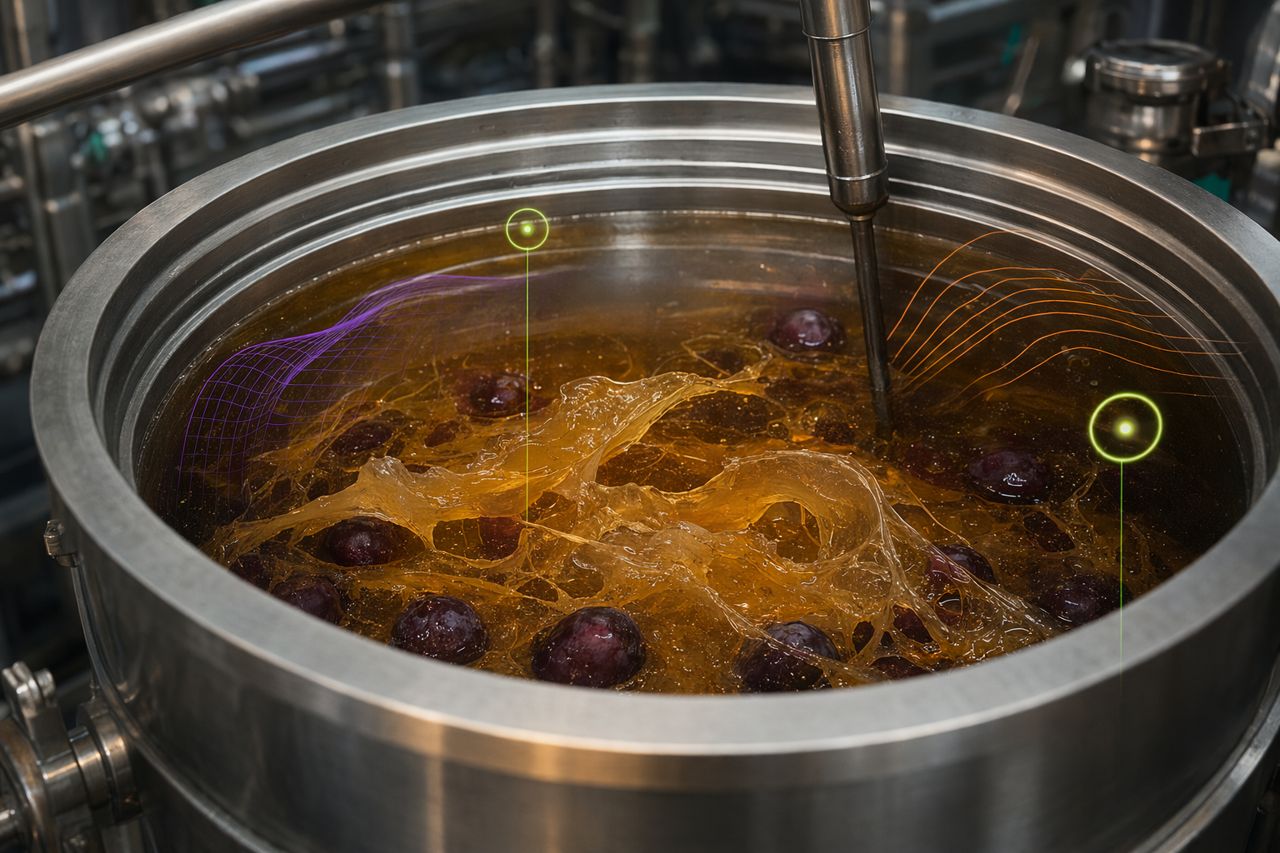
Pectin is a structural polysaccharide concentrated in plant cell walls and middle lamella. In processing, it can form hydrated networks that trap juice, suspend fine solids, hold cloud, and raise viscosity. Pectinase helps break that network into shorter, more mobile fragments.
In practical terms, the desired outcome may be one or more of the following:
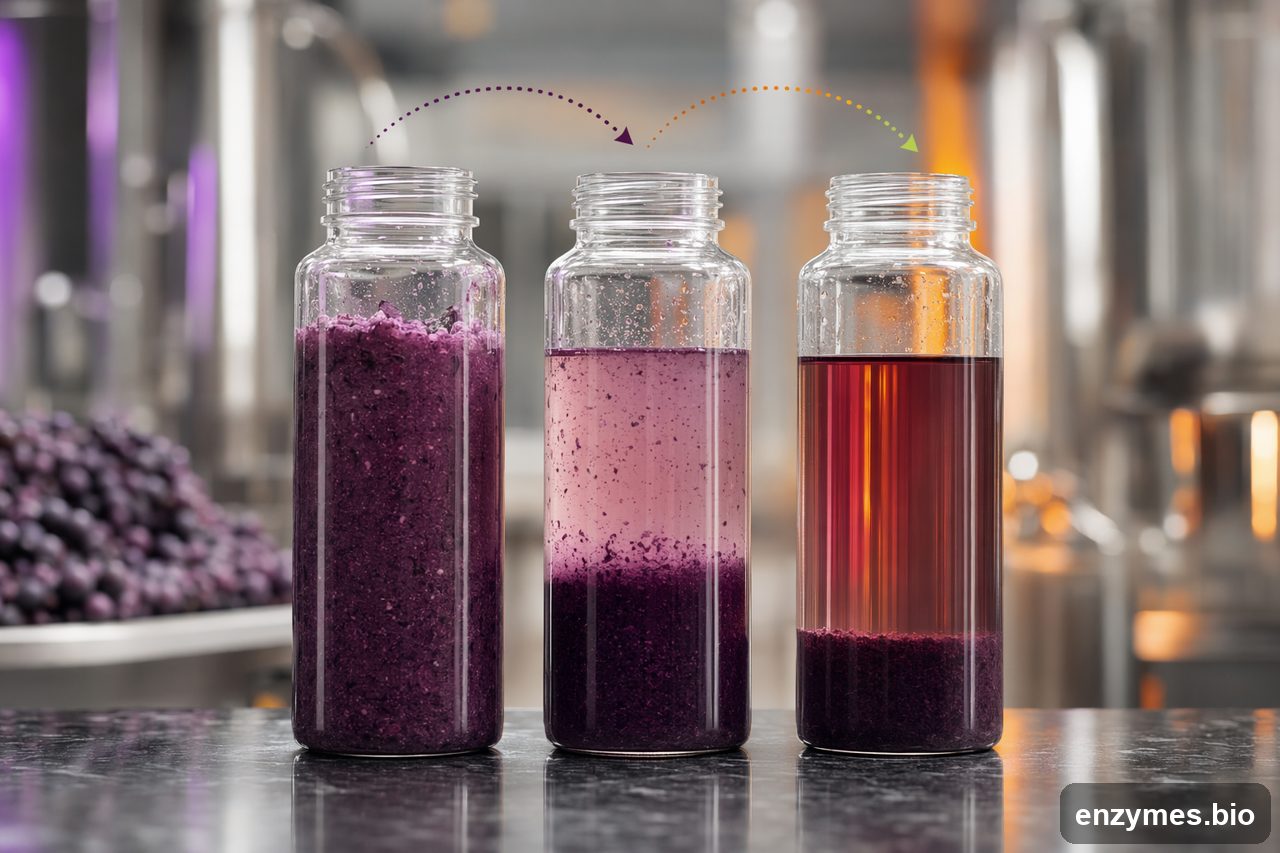
Faster juice release during maceration or pressing
Lower mash or puree viscosity
Improved free-run yield
Better settling, flotation, filtration, or centrifugation behavior
Reduced haze-forming pectin load
More consistent flow through membranes, screens, or polish filters
Improved extraction of color, aroma precursors, or soluble plant solids when appropriate
The same enzyme can behave differently across apple, citrus, grape, berry, tropical fruit, vegetable, and botanical substrates because the pectin architecture is different.
pH: match the enzyme window to the material
Most fruit systems are naturally acidic, which is why pectinase is widely used in juice and wine operations. However, a nominal fruit pH is not enough information. The enzyme experiences the actual pH of the liquid phase after blending, dilution, acid adjustment, sulfite addition, concentration, or fermentation changes.
Practical pH considerations
Acidic fruit mashes and juices often sit in a favorable pH region for many commercial pectinases.
Very low pH can slow reaction rate or reduce enzyme stability depending on the formulation.
Near-neutral plant extracts may require a pectinase selected for that application rather than a standard fruit clarification profile.
pH drift during fermentation or extraction can change performance over the run.
Buffering from minerals, proteins, or plant solids may make small pH corrections behave unevenly at scale.
Processing guidance
Before committing to a production condition, run a small process-representative trial at the actual pH of the substrate. Avoid testing only in clean model solutions. Pulp, skins, soluble solids, and suspended particles all change how the enzyme contacts pectin.
Temperature: balance speed, stability, and product quality
Temperature usually increases enzyme reaction speed up to a practical point, but the best production temperature is not always the highest temperature the enzyme can tolerate. Product quality, aroma retention, color stability, microbial controls, tank availability, and downstream equipment may define the real operating window.
Common temperature logic
Cooler conditions can work but may require longer contact time.
Moderate warmth often improves viscosity reduction and pressing response.
Excessive heat can reduce enzyme life and may set pectin, denature proteins, alter color, or affect flavor-sensitive materials.
Heat treatment before enzyme addition can change the substrate and make pectin more or less accessible.
Heat treatment after enzyme action is commonly used when the process requires enzyme inactivation.
For many fruit operations, practical trials are often designed around ambient-to-warm process temperatures rather than extreme thermal conditions. The target is a reliable result inside the plant’s real holding and transfer schedule.
Time: define the endpoint, not just the hold period
Pectinase treatment time should be tied to a measurable processing endpoint. A fixed holding time may be acceptable once validated, but during development it is better to track how the batch changes.
Useful endpoint indicators
Drop in mash or juice viscosity
Faster drainage or pressing curve
Improved settling rate
Better centrifuge feed behavior
Reduced filter pressure rise
Lower retained haze after clarification
More consistent membrane flux
The reaction is typically fastest when enzyme, water, and accessible pectin are well distributed. Later in the hold, the benefit may taper as the remaining pectin becomes less accessible or no longer drives the bottleneck.
Short versus long contact
Short contact may be enough for press aid, especially when the material is warm and well mixed. Longer contact may be useful for difficult pulps, high-pectin varieties, cold processing, or deeper clarification goals. Overholding can create scheduling risk and may not produce a proportional benefit, so validate the practical endpoint.
Substrate factors that change performance
Pectinase does not treat every fruit or plant stream equally. The substrate is often the largest source of variation.
Pectin type and structure
Pectin varies by source, maturity, and processing history. Degree of esterification, branching, calcium interactions, and prior heat exposure influence how easily the network opens. Apple pomace, citrus peel, grape must, berry puree, and tropical fruit pulp can all require different process assumptions.
Pulp loading and particle size
High solids increase viscosity and reduce mass transfer. Large particles may release juice slowly, while very fine particles can create stable suspensions that are harder to clarify. Milling, crushing, destoning, finishing, or pulping conditions should be considered part of the enzyme process, not a separate step.
Soluble solids and concentration
High soluble solids can slow diffusion and change water availability. Concentrated fruit bases, syrups, and purees may need adjusted mixing intensity, contact time, or staged dilution for efficient treatment.
Minerals and calcium
Calcium can strengthen certain pectin networks. In some streams, calcium-associated pectin contributes to gel strength, haze, or filter resistance. Water source, fruit variety, and ingredient additions can all influence this behavior.
Alcohol, sulfite, and fermentation context
In wine and fermented fruit systems, alcohol level, sulfite management, fermentation temperature, and cap management can affect enzyme performance and extraction goals. Pectinase selection should align with the production stage: pre-fermentation maceration, free-run improvement, press fraction management, or post-fermentation clarification support.
Mixing and addition: contact quality matters
Poor dispersion can make a good enzyme look weak. Pectinase should be added where it can distribute quickly without localized overdosing, dead zones, or foam-driven losses.
Good addition practice
Pre-dilute when appropriate for the plant procedure.
Add into active circulation or controlled mixing.
Avoid adding into static, highly viscous zones.
Confirm that the enzyme contacts the full batch, not only the liquid surface.
Document addition point, mixing time, tank geometry, and temperature at addition.
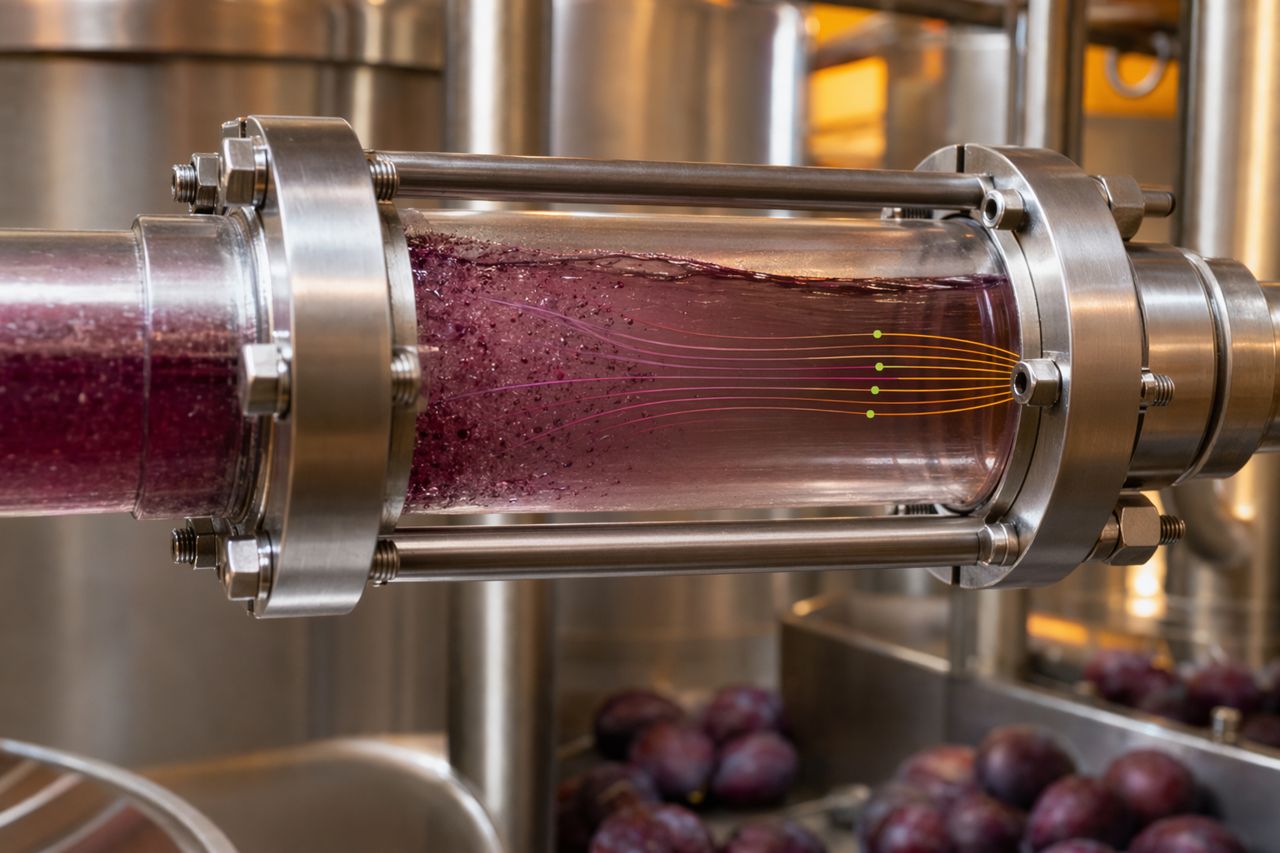
For continuous processing, residence time distribution is as important as the nominal residence time. Short-circuiting can leave a fraction of the stream under-treated.
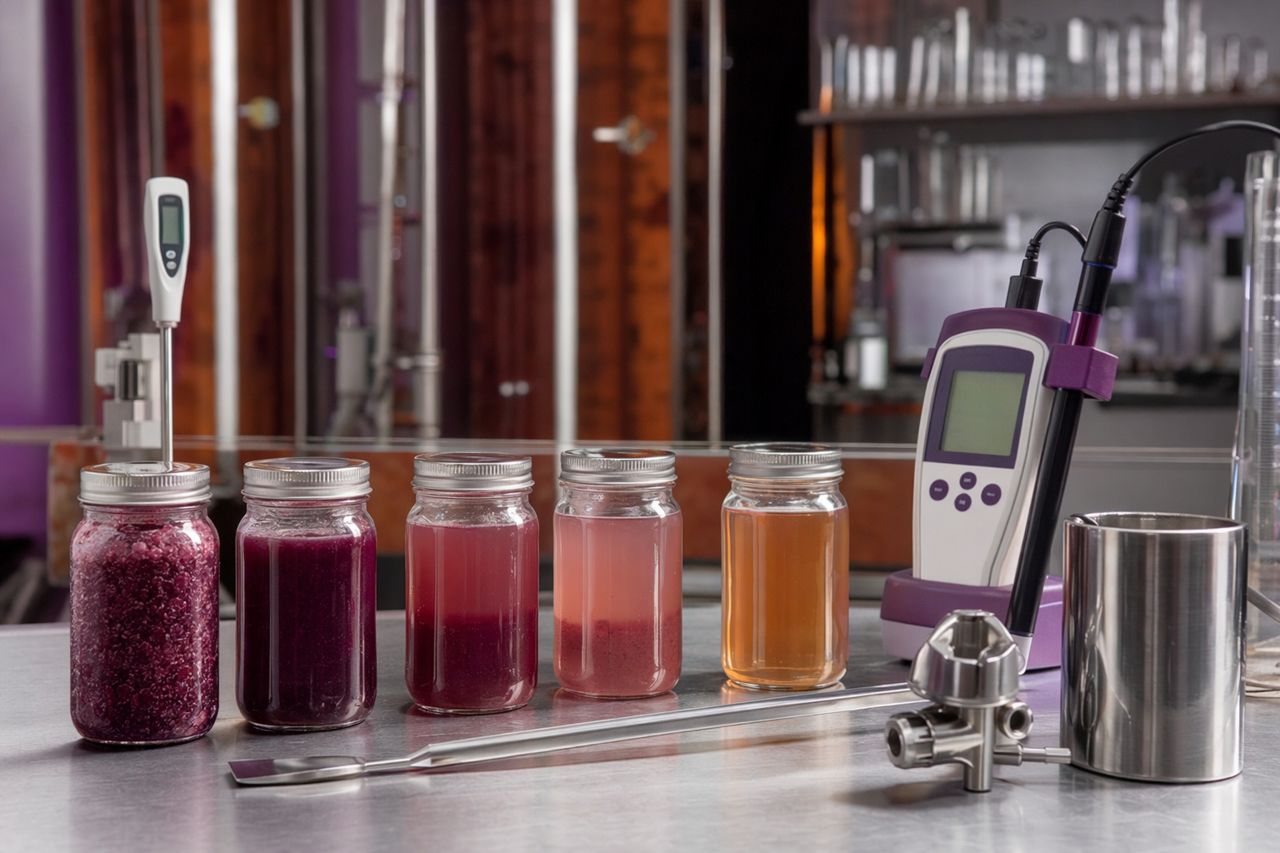
Designing a practical pectinase trial
A useful trial isolates the variables that matter in production. Avoid changing pH, temperature, enzyme level, and mixing all at once unless the goal is broad screening.
Recommended trial structure
Define the commercial objective: yield, viscosity, clarity, throughput, filterability, or extraction.
Use process-representative raw material, including normal seasonal variability where possible.
Set two or three realistic pH and temperature conditions, not laboratory extremes.
Track time-based endpoints such as viscosity, drainage, turbidity, settling, or filtration behavior.
Compare untreated control, current process, and candidate pectinase condition.
Record heat history, solids level, particle size, and addition sequence.
Confirm the result in a pilot or production-scale hold before locking the specification.
Troubleshooting common underperformance
The mash is still too viscous
Possible causes include low temperature, short contact time, poor mixing, high solids, calcium-reinforced pectin, or a pectinase profile not matched to the substrate.
Clarification improves, but filtration is still slow
Pectin may not be the only problem. Fine starch, protein, glucans, gums, waxes, or microbial polysaccharides may also drive filter pressure. Confirm the foulant before increasing pectinase treatment.
The lab trial worked, but production did not
Scale often changes mixing, heat-up time, residence time, and raw material distribution. Review the addition point, tank turnover, pulp temperature, and whether the production lot had a different maturity or solids profile.
The process result varies by season
Pectin level and structure shift with cultivar, maturity, storage, and weather. Seasonal qualification can prevent overcorrection and protect throughput during high-pectin periods.
Specification conversations for buyers
When discussing Pectinase (Pectinolytic Enzyme) for procurement or formulation, share the process context rather than only the application name.
Helpful information includes:
Fruit, vegetable, botanical, or byproduct stream
Fresh, frozen, concentrated, fermented, or heat-treated status
Target outcome: pressing, viscosity reduction, clarification, extraction, or filtration support
Approximate operating pH and temperature
Contact time available in the plant
Solids level and particle size profile
Batch or continuous operation
Downstream separation equipment
Any constraints on allergen status, processing aids, labeling, or documentation
This lets Pellucid Works recommend a pectinase format and process window that fits the plant rather than forcing the plant around the enzyme.
Request a quote or get pricing
Tell us what you are processing and what result you need. Pellucid Works will respond with practical supply options, documentation availability, and next-step trial guidance.