Pectinase Compatibility in Multi-Enzyme Processing
A technical guide to using pectinase alongside amylase, cellulase, hemicellulase, protease, beta-glucanase, tannase, and other enzyme systems in juice, wine, and ingredient processing.
Pectinase Compatibility in Multi-Enzyme Processing
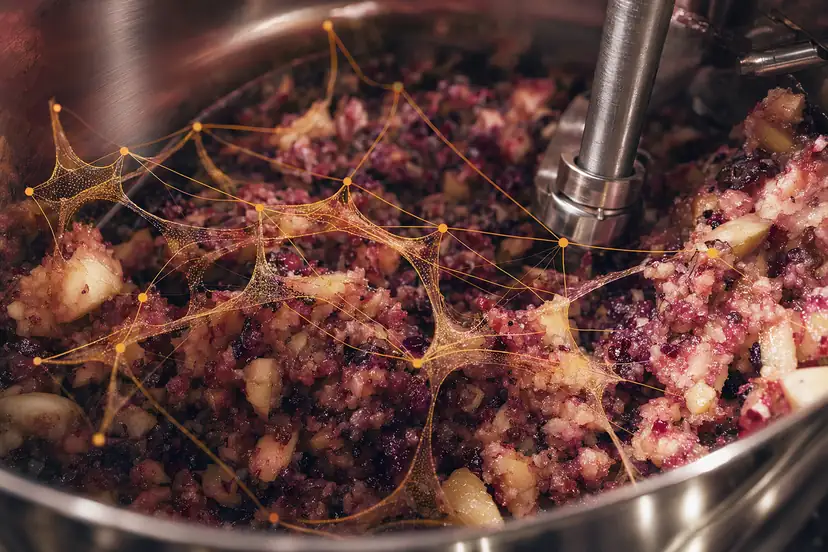
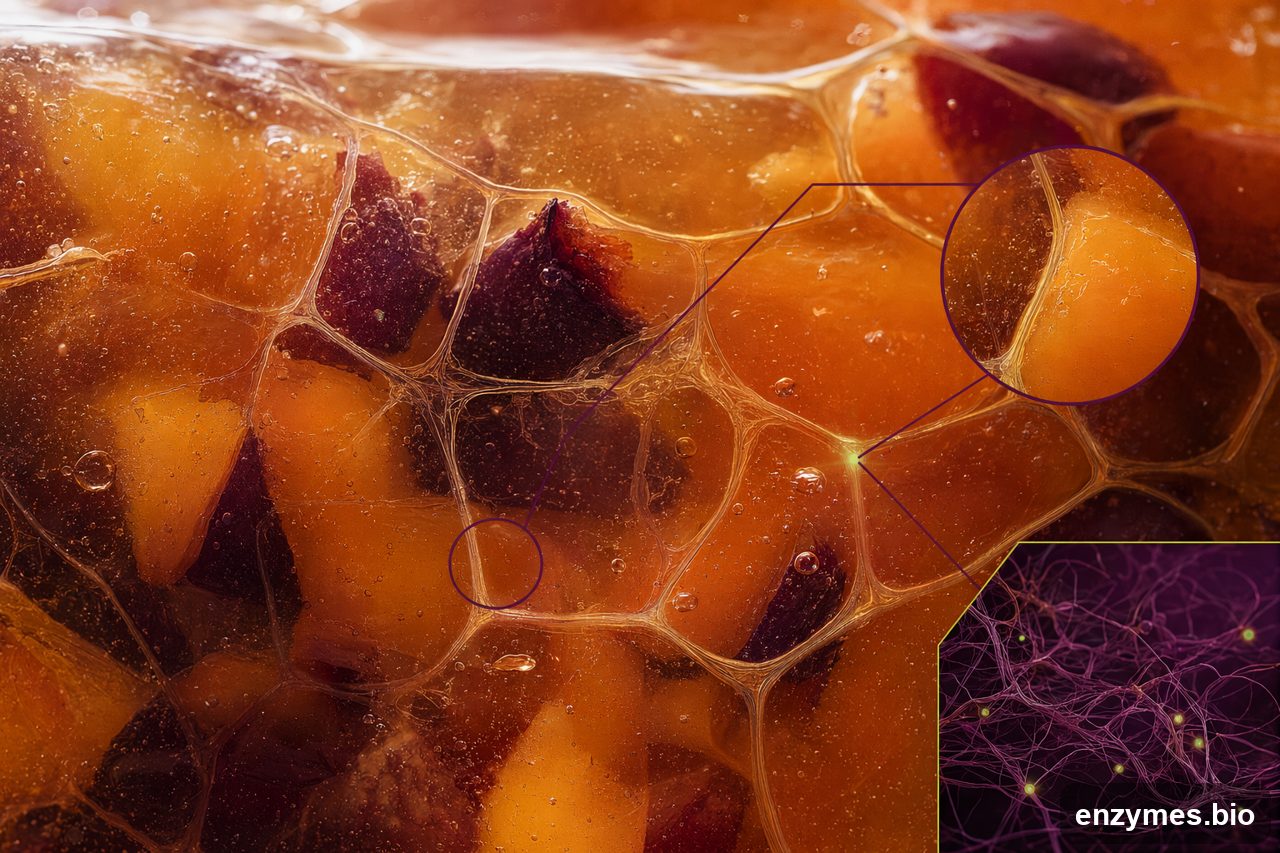
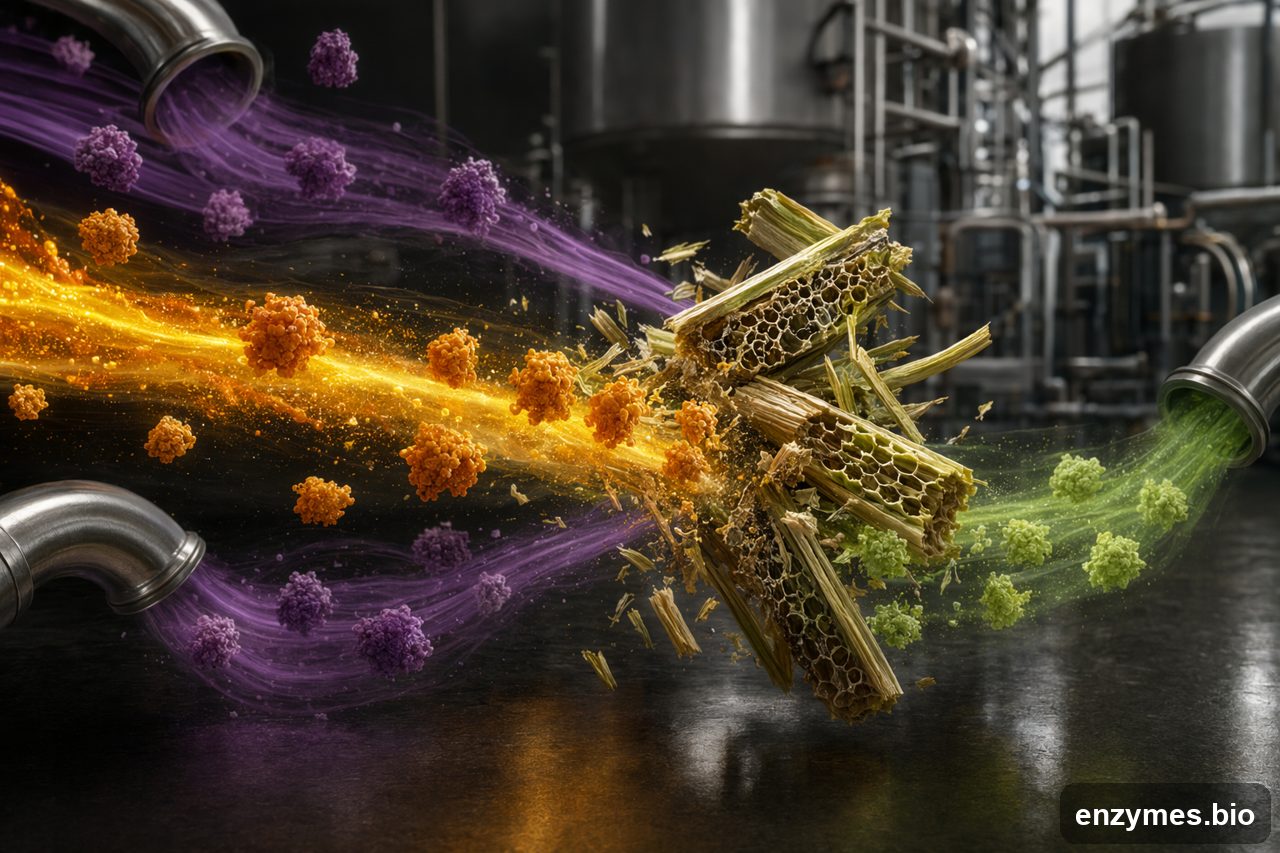
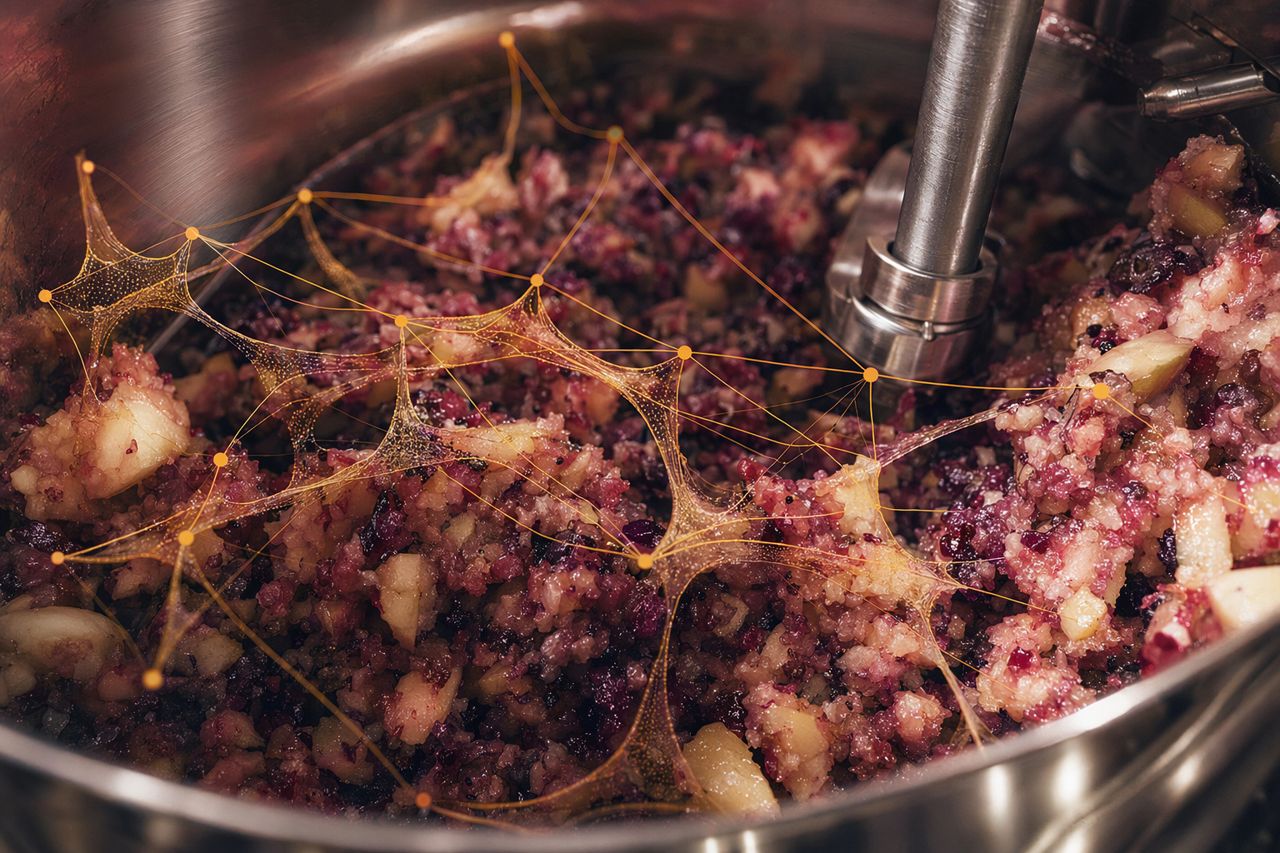
Pectinase often sits at the center of fruit, vegetable, wine, and botanical extraction workflows because pectin is a structure-forming barrier. It increases viscosity, holds suspended solids, traps liquid in pulp, and interferes with filtration. In multi-enzyme processing, the role of pectinase is not to replace other enzymes. It is to open the matrix so the rest of the enzyme system can work with fewer physical restrictions.
For technical buyers, the compatibility question is practical: can pectinase run in the same process window as other enzymes, or should it be staged separately? The answer depends on substrate, target outcome, pH, temperature, contact time, solids load, and how much native variability the raw material brings into the plant.
What pectinase contributes in a mixed enzyme system
Pectinase acts on pectic substances that help bind plant cell walls and create gel-like networks in crushed or macerated material. In processing terms, this can support:
Lower pulp viscosity before pressing, pumping, or concentration
Improved juice release from fruit mash and vegetable tissue
Faster clarification when pectin haze is limiting separation
Cleaner filtration by reducing gel-forming residues
More predictable settling or centrifugation behavior
Better extraction of soluble components from plant material
When pectinase is paired correctly with other enzyme families, the result is not simply more enzymatic activity. It is better access, better flow, and better separation.
Compatibility is a process-design question, not a label claim
Two enzyme products can be chemically compatible and still perform poorly together if the process window is wrong. Before combining pectinase with another enzyme family, define the process priority:
Liquefaction: reduce viscosity and release trapped liquid.
Clarification: reduce haze-forming pectin and improve separation.
Extraction: increase soluble yield from plant tissue.
Filtration support: reduce fouling and improve throughput.
Texture or mouthfeel control: modify structure without over-processing.
The strongest multi-enzyme programs usually assign each enzyme family a job, then set the sequence around the most restrictive condition.
Common enzyme pairings with pectinase
Pectinase with cellulase
Pectinase and cellulase are frequently considered together in fruit, vegetable, and botanical extraction. Pectinase loosens pectin-rich middle lamella structures, while cellulase targets cellulose-containing cell wall components.
This pairing is useful when the raw material has firm tissue, high insoluble solids, or limited juice release after crushing. It can also help in pulpy matrices where pectin reduction alone improves flow but does not fully open the cell wall structure.
Watchpoint: cellulase can alter texture and solids release. If the target is bright clarification rather than deep tissue breakdown, dose strategy and contact time should be controlled carefully.
Pectinase with hemicellulase
Hemicellulase can complement pectinase in fibrous plant materials where hemicellulose contributes to viscosity, suspended solids, and extractability. The combination is often relevant in ingredient manufacturing, plant extracts, and processing streams with skins, peels, hulls, or pomace.
Best-fit applications: fruit and vegetable extracts, fiber-rich slurries, botanical ingredients, byproduct valorization.
Watchpoint: additional cell wall breakdown may increase soluble solids and fine particles. Downstream separation equipment should be considered before intensifying the enzyme package.
Pectinase with amylase
Pectinase and amylase serve different structural targets. Pectinase addresses pectin-driven viscosity and haze; amylase addresses starch-driven viscosity and iodine-positive residues in starch-containing materials.
This pairing is relevant when fruit or plant-based streams contain both pectin and starch, or when blended raw materials introduce starch variability.
Best-fit applications: mixed fruit preparations, vegetable juices, plant-based ingredient slurries, certain puree systems.
Watchpoint: amylase is only valuable when starch is actually part of the processing constraint. If viscosity is pectin-led, pectinase should remain the primary lever.
Pectinase with protease
Protease may be used where protein haze, protein-bound phenolics, or extraction efficiency are concerns. In multi-enzyme systems, protease can support clarification and release in some plant matrices, but it must be evaluated carefully because it may affect functional proteins or sensory-relevant components.
Watchpoint: protease compatibility is highly product-specific. If protein functionality is part of the final ingredient specification, protease should be staged or avoided unless validated.
Pectinase with beta-glucanase
Beta-glucanase is most relevant when beta-glucans contribute to viscosity or filtration resistance. It is not a universal pectinase partner, but it can be useful in mixed botanical or cereal-containing streams where both pectin and beta-glucan structures are present.
Watchpoint: do not add beta-glucanase to solve a pectin problem. Use it when beta-glucan is confirmed or strongly suspected as part of the bottleneck.
Pectinase with tannase
Tannase may be paired with pectinase in selected fruit, tea, botanical, or phenolic-rich processes. Pectinase supports release and clarification; tannase can help modify tannin-related behavior depending on the product goal.
Best-fit applications: phenolic-rich extracts, tea-adjacent botanicals, specialty fruit processes.
Watchpoint: tannin modification can change astringency, color behavior, and analytical profile. The pairing should be guided by the finished specification, not only by extraction yield.
Same-tank vs staged addition
Pectinase can often be used in the same tank with compatible enzyme families, but same-tank addition is not always the best operational choice. Staging may improve control when enzymes need different process conditions or when one enzyme changes the substrate in a way that affects the next step.
Same-tank addition may be appropriate when:
The enzymes share an acceptable pH and temperature window
The target is broad liquefaction or extraction
Contact time is limited and operational simplicity matters
The substrate is variable but the outcome is tolerant of some variation
Downstream separation is designed for increased soluble and fine material
Staged addition may be better when:
Clarification must be tightly controlled
Over-extraction creates color, flavor, or filtration issues
Protein, phenolic, or texture specifications are sensitive
One enzyme family needs a distinct process window
The line requires predictable endpoint control before filtration or stabilization
A common approach is to let pectinase reduce the pectin network first, then introduce enzymes that target cellulose, hemicellulose, starch, protein, or other specific barriers.
Process variables that influence compatibility
pH window
Pectinase performance depends on the acidity of the processing stream, and so does compatibility with other enzymes. Fruit and wine applications commonly operate in acidic conditions, while some plant ingredient systems sit closer to mildly acidic or neutral conditions. The practical question is whether the combined enzyme system retains useful performance in the actual matrix, not only in water or buffer.
Temperature profile
Temperature affects reaction speed, enzyme stability, extraction selectivity, and microbial control. In multi-enzyme processing, the selected temperature should protect the most sensitive enzyme while still giving pectinase enough process momentum to reduce viscosity and improve separation.
Contact time
Short contact time favors enzymes that act quickly on accessible structures. Longer contact time can improve extraction but may also increase fine solids, soluble load, or changes in sensory and functional profile. Pectinase is often used early because pectin reduction can improve access for later steps.
Solids load and mixing
High-solids slurries create diffusion and mixing limitations. In these systems, pectinase may appear underperforming when the real issue is enzyme distribution. Agitation, dilution strategy, particle size, and addition point can matter as much as enzyme selection.
Native inhibitors and raw material variation
Ripeness, cultivar, storage conditions, thermal history, sulfite use, phenolic load, and mineral profile can all influence enzyme response. Compatibility testing should use representative process material, not only a simplified lab substrate.
A practical selection framework
Use this framework when designing a pectinase-centered multi-enzyme program:
Processing problem
Pectinase role
Possible companion enzyme family
Design note
High pulp viscosity
Break pectin gel structure
Cellulase or hemicellulase
Confirm whether viscosity is pectin-led or fiber-led
Low juice yield
Improve liquid release
Cellulase or hemicellulase
Manage fine solids generation
Pectin haze
Reduce pectin-related cloud
Usually pectinase-led
Avoid unnecessary enzymes that add separation load
Starch contribution
Address pectin fraction
Amylase
Use only when starch is a confirmed issue
Protein-related haze
Improve pectin clarity barrier
Protease
Validate against protein functionality and finished spec
Filtration bottleneck
Reduce gel fouling
Beta-glucanase, cellulase, or hemicellulase where relevant
Diagnose the fouling material before combining enzymes
Phenolic-rich extraction
Improve matrix opening
Tannase in selected systems
Watch color, astringency, and analytical profile
Applications where compatibility planning matters
Juice and puree processing
In apple, berry, tropical fruit, stone fruit, and vegetable systems, pectinase may support pressing, clarification, and filtration. Companion enzymes are most useful when the matrix contains resistant cell wall fractions, starch contribution, or mixed botanical solids.
Wine and cider production
Pectinase can support must clarification, juice release, settling, and filtration readiness. Compatibility decisions should consider phenolics, color extraction, varietal character, and cellar timing. Aggressive multi-enzyme use is not always appropriate; targeted pectin work often delivers the cleanest process benefit.
Ingredient and extract manufacturing
Plant-based ingredient processors often work with variable feedstocks, higher solids, and broader extraction goals. In these systems, pectinase can improve flow and access, while cellulase, hemicellulase, protease, beta-glucanase, or tannase may be evaluated for specific structural barriers.
Byproduct valorization
Pomace, peels, press cake, and botanical residues may require a broader enzyme system than primary juice processing. Pectinase can help release entrained liquid and soluble fractions, while companion enzymes may increase extraction from remaining cell wall structures.
Pilot testing recommendations
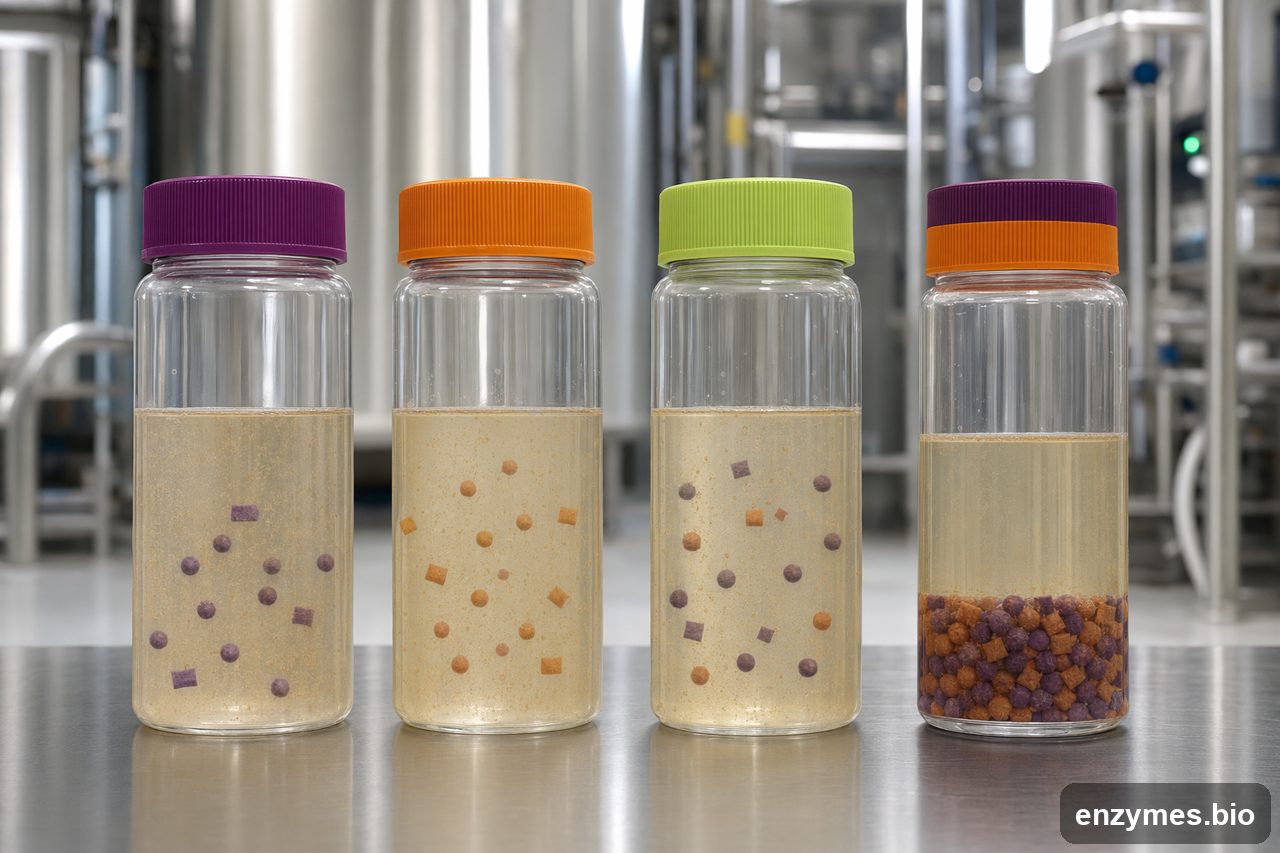
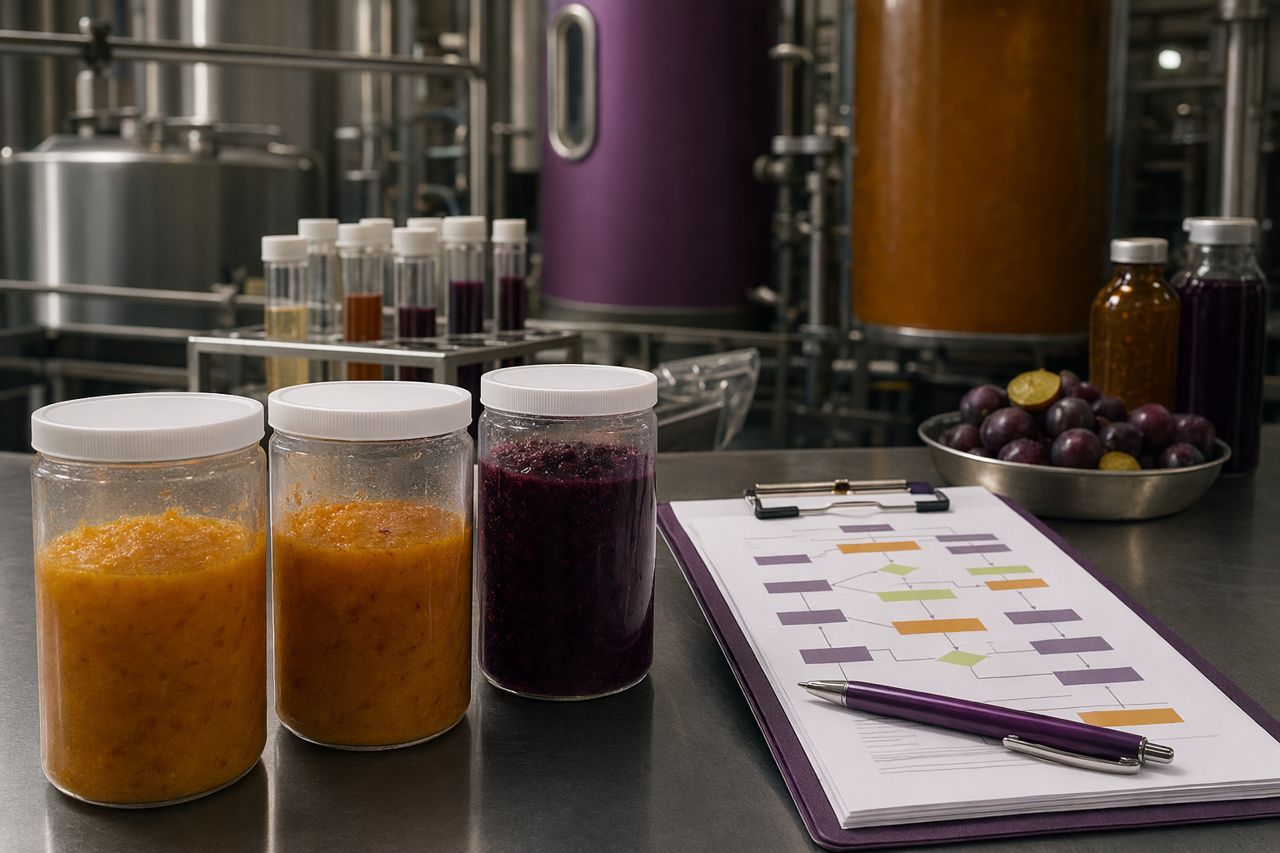
A compatibility screen does not need to be complicated, but it should be disciplined. For each candidate enzyme combination, compare:
Pectinase alone
Companion enzyme alone
Same-tank combination
Staged pectinase-first addition
Staged companion-first addition, if technically relevant
Process blank without enzyme
Measure outcomes that matter to the plant: viscosity trend, press yield, turbidity, filterability, soluble solids profile, color impact, sediment behavior, and finished specification. The right combination is the one that improves the bottleneck without creating a downstream penalty.
Procurement notes for industrial buyers
When sourcing pectinase for multi-enzyme processing, request information that maps to your process rather than a generic product description. Useful discussion points include:
Target substrate and raw material variability
Processing pH and temperature range
Desired outcome: liquefaction, clarification, yield, filtration, extraction, or texture control
Intended companion enzyme families
Same-tank or staged addition preference
Downstream equipment: press, decanter, centrifuge, filter, evaporator, membrane, or stabilizer
Finished product constraints for color, haze, flavor, viscosity, and labeling requirements
Pellucid Works supports technical purchasing conversations around pectinase fit, formulation direction, and process compatibility. The goal is not to overbuild an enzyme blend. The goal is to remove the correct barrier at the correct point in the line.
Request pectinase pricing or compatibility support
If you are evaluating pectinase for a multi-enzyme process, send the basic process context below. A technical commercial contact can help narrow the formulation direction and provide pricing for your volume and application.