How to Use Pectinase in Industrial Fruit Processing
A practical implementation framework for using pectinase in juice, wine, puree, and fruit ingredient production, including addition points, process variables, validation, and scale-up controls.
How to use pectinase in industrial fruit processing
Pectinase is used where fruit pectin is limiting throughput, yield, clarification, filtration, or texture control. In practical terms, pectinase helps convert a thick, gel-forming pectin network into a more processable liquid phase.
For juice, wine, puree, concentrate, and fruit ingredient operations, the question is not simply whether to add pectinase. The question is where it belongs in the process, what outcome it must deliver, and how the treatment will be verified before full-scale adoption.
Pellucid Works approaches pectinase use as a process-control decision: define the raw material problem, select the treatment point, control the conditions, then validate against measurable plant outcomes.
What pectinase does in fruit systems
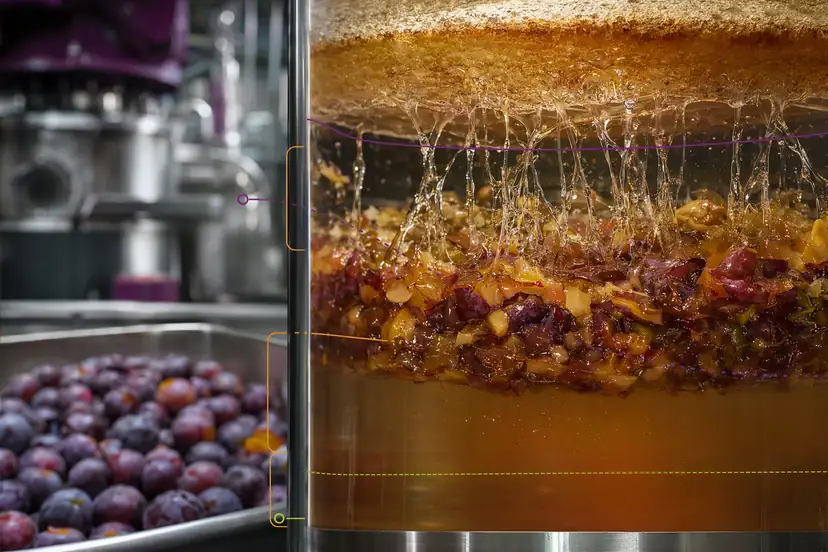
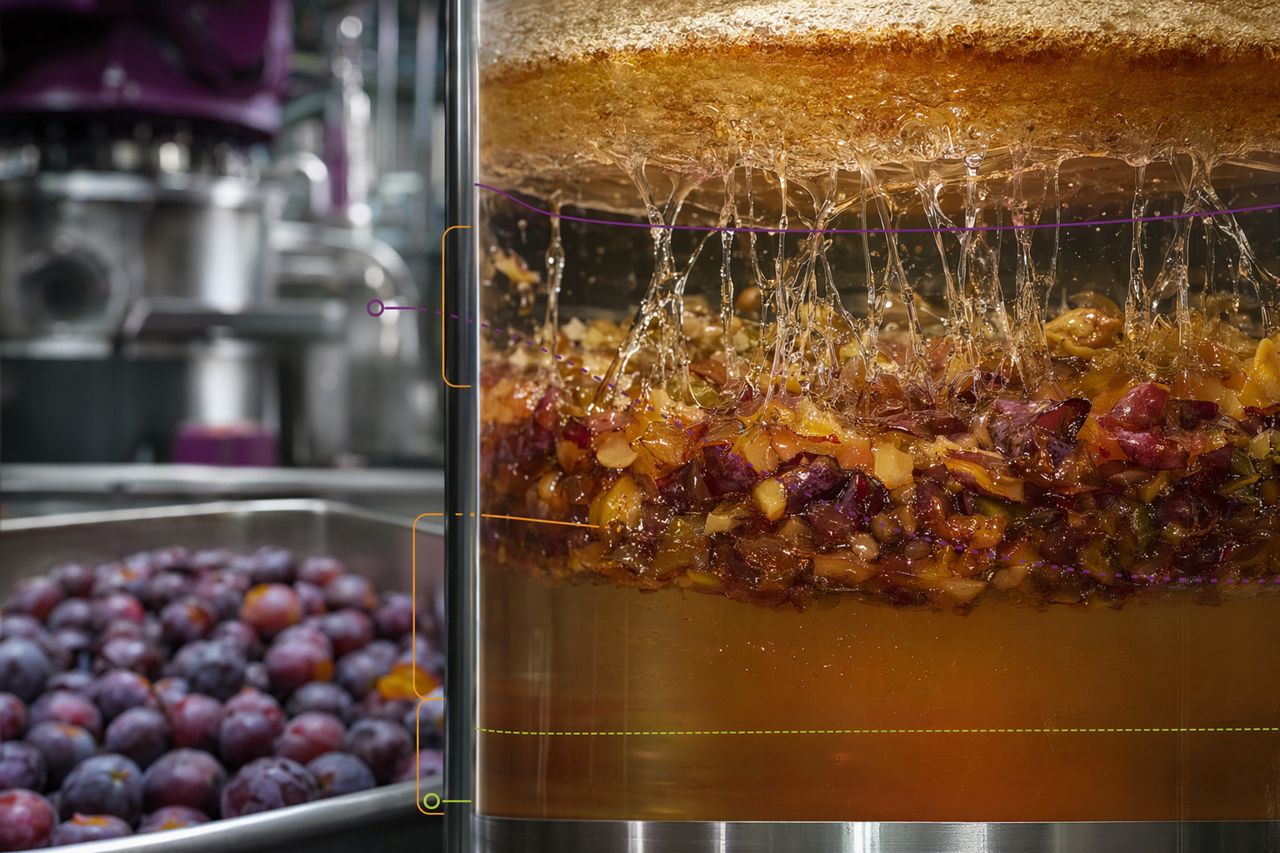
Pectin is a structural polysaccharide found in plant cell walls and middle lamella. During crushing, milling, maceration, or heating, pectin can move into the liquid phase and create processing issues:
Elevated mash or juice viscosity
Reduced free-run yield
Slow pressing or extraction
Persistent haze or cloud instability
Difficult centrifugation or filtration
Gel formation during concentration or storage
Poor separation of pulp, serum, and suspended solids
Pectinase breaks down pectic substances into smaller, less gel-forming fragments. The operational result is usually improved liquid release, lower viscosity, better clarification behavior, and more predictable downstream separation.
Where pectinase can be added
Mash or crushed fruit treatment
Adding pectinase after crushing or milling is common when the goal is juice release, pressing efficiency, or viscosity reduction before separation. This approach gives the enzyme direct access to disrupted fruit tissue and can improve extractability before press loading.
Best fit for:
Apple, pear, berry, stone fruit, tropical fruit, and mixed-fruit mashes
Pressing operations with high cake moisture
Processes where pulp viscosity limits transfer, pumping, or press cycle speed
Juice or serum clarification
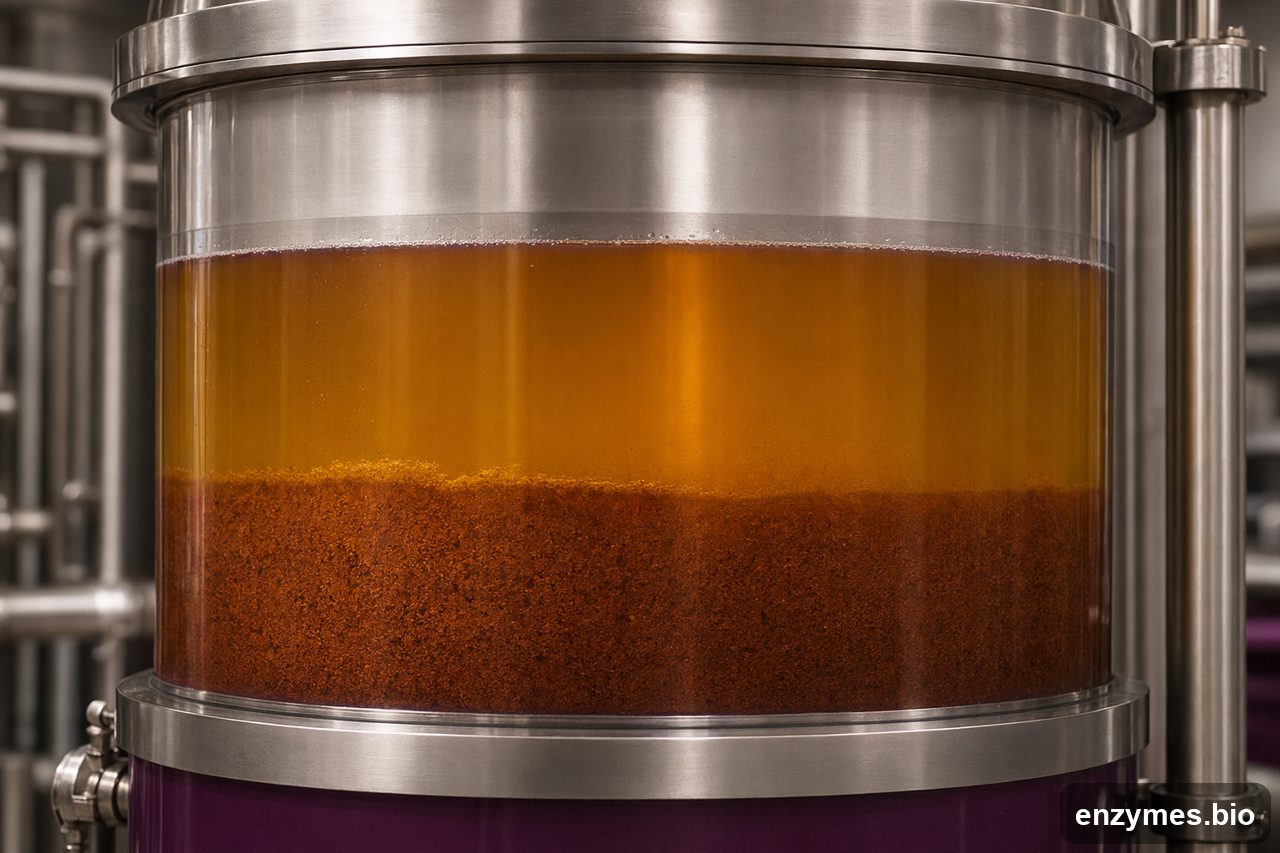
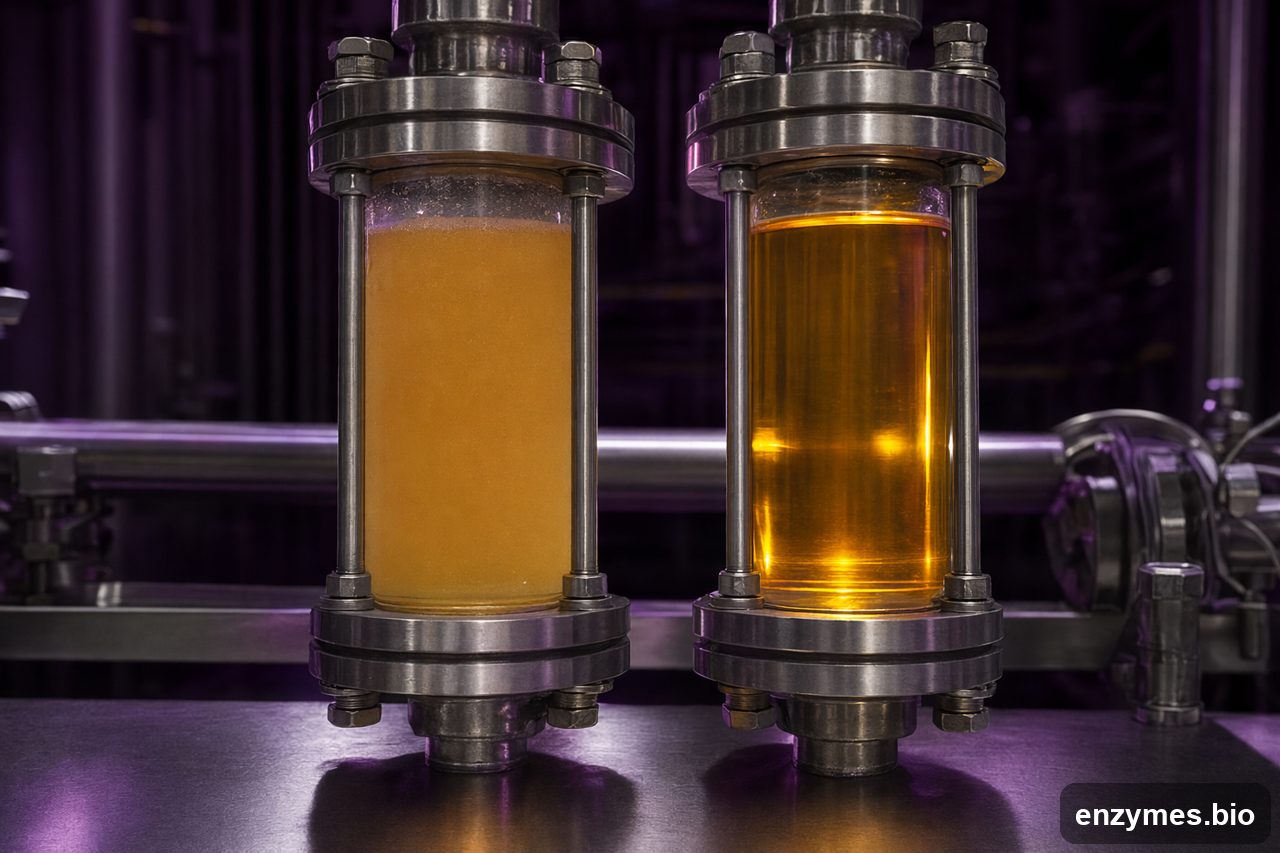
Pectinase can also be applied after pressing or extraction, particularly when haze reduction, centrifuge performance, or filtration rate is the primary objective. This treatment is often used before fining, flotation, centrifugation, membrane filtration, or polishing filtration.
Best fit for:
Cloudy juices requiring clarification
Wine and cider processing
Concentrate feed streams
Fruit ingredient streams where pectin haze affects specification
Puree and fruit preparation processing
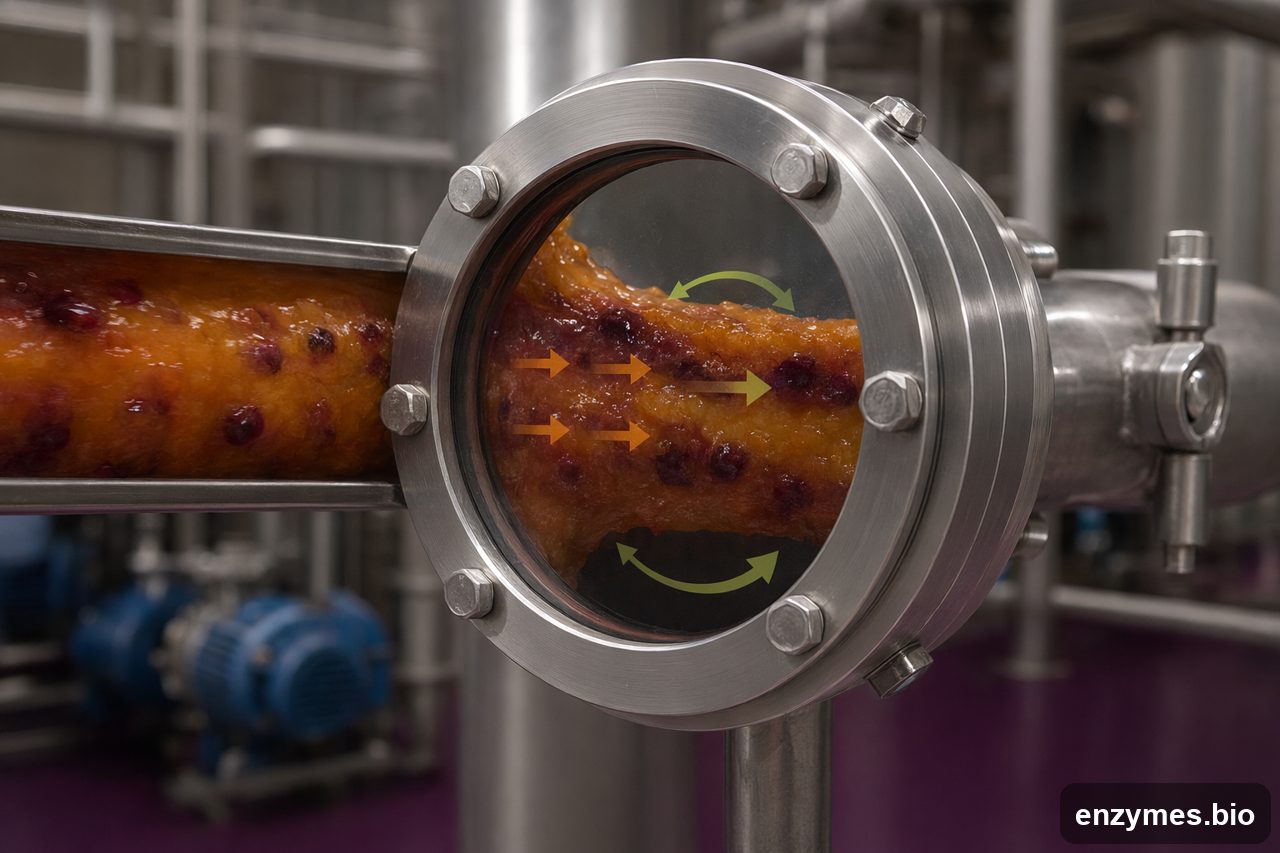
In puree, filling, fruit base, and ingredient systems, pectinase may be used to tune viscosity, improve transferability, support deaeration, or standardize texture before blending or concentration. The treatment must be managed carefully so the finished product retains the intended body and stability.
Best fit for:
High-viscosity fruit bases
Fruit preparations for industrial blending
Concentrates and intermediate fruit ingredients
Processes requiring consistent pumpability or heat transfer
A practical implementation framework
1. Define the process constraint
Start with the bottleneck. Pectinase selection and use should be tied to a measurable processing target, not a generic enzyme addition.
Common targets include:
Higher juice yield from a defined fruit input
Shorter press cycles
Lower mash, juice, or puree viscosity
Faster clarification
Improved centrifuge separation
Better filtration throughput
Reduced gel risk before concentration
More consistent final turbidity or texture
A clear target prevents over-treatment and makes plant trials easier to evaluate.
2. Map the fruit raw material
Fruit variety, maturity, season, storage history, thermal exposure, and mechanical preparation all affect pectin behavior. Two fruit lots with the same soluble solids can perform very differently if their pectin load, particle size, or tissue breakdown differs.
Before treatment, document:
Fruit type and variety or blend
Ripeness and storage condition
Crushing, milling, or maceration intensity
Pulp-to-liquid ratio
Existing heat treatment
Target product: clear juice, cloudy juice, wine, puree, concentrate, or ingredient base
This information helps determine whether the enzyme should be used early in the mash, later in the juice, or in a controlled intermediate holding step.
3. Choose the addition point
The addition point determines enzyme access, contact time, and downstream impact.
For yield improvement, add where pectinase can contact disrupted fruit tissue before pressing or extraction.
For clarification, add after juice recovery and before separation, fining, flotation, centrifugation, or filtration.
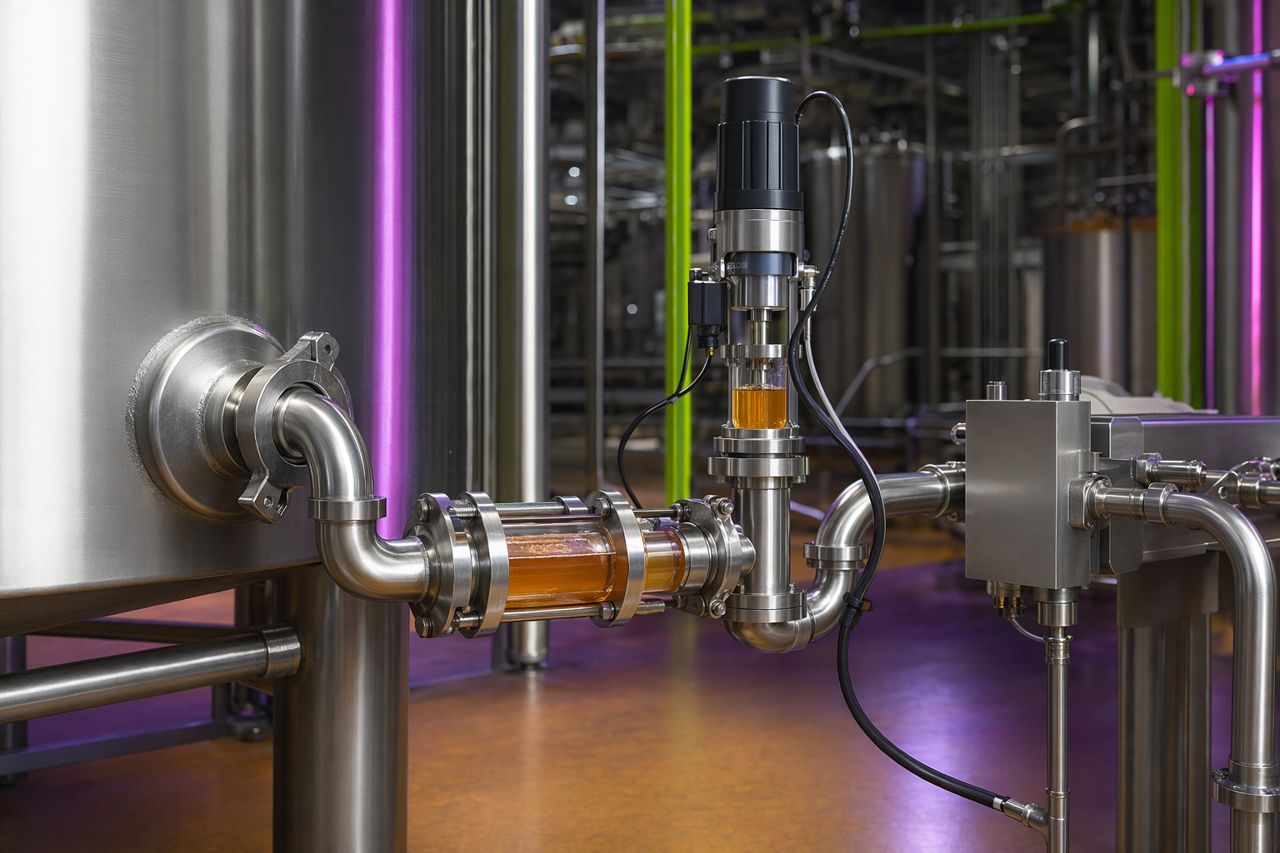
For viscosity control, add where mixing is reliable and the stream can be held under stable conditions long enough to reach the desired change.
Avoid adding pectinase into poorly mixed zones, immediately before harsh thermal steps, or after separation stages where the main pectin load has already created the bottleneck.
4. Control pH, temperature, and contact time
Pectinase performance depends on process conditions. Industrial teams should confirm that the selected product is suitable for the fruit matrix and the plant’s operating window.
Control points include:
pH of the mash, juice, wine, or puree stream
Process temperature during the hold
Available residence time
Mixing intensity and uniformity
Solids level and particle distribution
Compatibility with fining agents, sulfite programs, preservatives, or process aids
Planned enzyme inactivation or downstream heat treatment, where required
Do not evaluate pectinase in isolation from the line conditions. A treatment that performs well in a beaker can underperform in a tank if mixing, temperature drift, or residence time is different.
5. Run a structured plant trial
A good pectinase trial compares treated and untreated material under the same fruit lot, temperature, equipment, and timing. The goal is to link enzyme treatment to operating value.
Suggested trial measurements:
Press yield or free-run volume
Press cycle time
Mash or juice viscosity trend
Turbidity after settling, flotation, centrifugation, or filtration
Filter pressure rise over time
Flow rate through filtration or membranes
Solids separation behavior
Final product texture, clarity, or specification fit
Sensory-neutral processing impact, where relevant to the product category
Record enough detail to repeat the result. Trial notes should include raw material condition, addition point, contact time, temperature, pH, mixing conditions, and downstream performance.
Pectinase use by processing objective
Improve press yield
Use pectinase before pressing when pectin-rich mash holds liquid in a gel-like structure. The treatment can reduce mash resistance and release more juice from the same fruit mass.
Operational focus:
Add after crushing or milling
Ensure uniform distribution through the mash
Hold before pressing under controlled conditions
Compare treated and untreated press cake moisture and recovered volume
Reduce viscosity
Use pectinase when fruit streams are difficult to pump, heat, blend, or concentrate. Lower viscosity can improve transfer, tank turnover, heat exchange, and downstream separation.
Operational focus:
Treat in a vessel or line section with reliable mixing
Track viscosity change against target texture or processability
Avoid excessive treatment if product body must be preserved
Support clarification
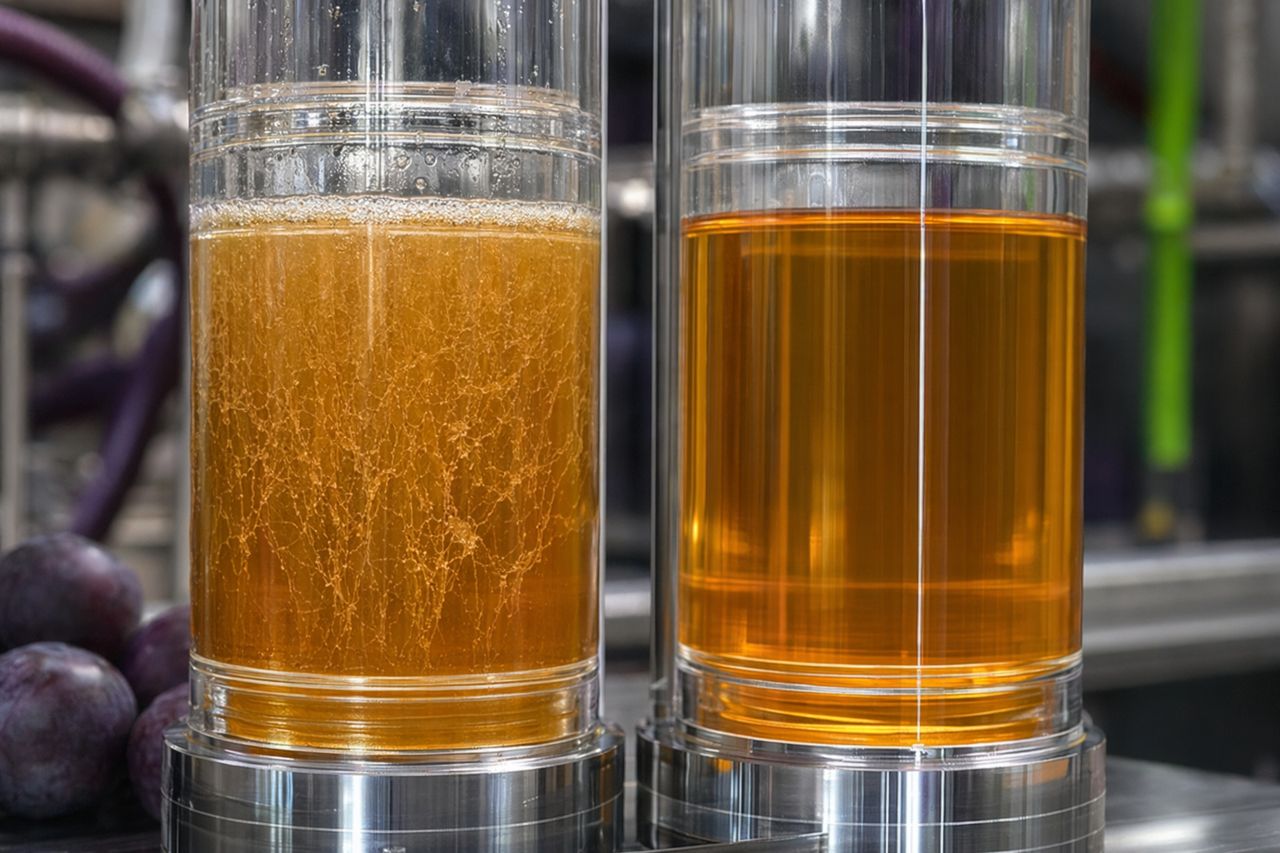
Use pectinase before clarification steps when pectin stabilizes haze or slows settling and filtration. Breaking down pectin can make suspended material easier to separate.
Operational focus:
Add after juice recovery and before clarification
Allow sufficient contact before centrifugation, flotation, fining, or filtration
Track turbidity and filtration behavior, not only visual brightness
Prepare for concentration
Pectin can cause viscosity rise, fouling, and gel behavior during evaporation or concentration. Pectinase treatment before concentration may improve flow and reduce process instability.
Operational focus:
Treat the feed stream before evaporator loading
Confirm compatibility with heat profile and product specification
Monitor viscosity, fouling tendency, and finished concentrate behavior
Common implementation mistakes
Avoid these failure points when introducing pectinase:
Adding enzyme too late, after pectin has already limited pressing or filtration
Treating without a defined performance target
Running trials without an untreated control
Ignoring fruit lot variability
Using inadequate mixing in high-solids mash
Holding under unstable temperature or pH conditions
Measuring only appearance instead of throughput, yield, or separation data
Over-treating texture-sensitive products
Assuming a laboratory result will scale without residence-time and mixing checks
Pectinase is most valuable when it is treated as a controlled processing tool, not a corrective additive.
Scale-up checklist for production teams
Before moving from trial to routine production, confirm:
The target outcome is measurable and economically relevant
The addition point is accessible, safe, and repeatable
Mixing is sufficient at production volume
The process has a defined hold time or residence window
Temperature and pH are within the selected product’s operating range
Downstream fining, filtration, membrane, or heat steps are compatible
Finished product specifications remain stable
Operators have a clear addition and documentation procedure
Procurement has defined packaging, lead time, storage, and lot-control requirements
Storage and handling considerations
Industrial pectinase should be stored and handled according to the product documentation supplied with the material. Keep containers closed when not in use, protect from unsuitable temperatures or contamination, and follow site procedures for enzyme handling, PPE, and allergen or sensitizer controls.
For receiving and inventory teams, the practical questions are straightforward:
What pack size supports the production schedule?
What shelf-life and storage conditions are required?
How will lots be traced through production?
Is the format appropriate for existing dosing and handling systems?
Are documentation, specification, and regulatory files available for the intended market?
Selecting a pectinase supplier
For industrial fruit processing, supplier fit matters as much as enzyme fit. Ask for support that connects the product to the process.
Useful supplier discussion points:
Fruit type and process stage
Target outcome: yield, clarity, viscosity, filtration, concentration, or texture control
Current bottleneck and baseline performance
Temperature, pH, residence time, and mixing conditions
Downstream separation and heat steps
Documentation requirements for procurement, quality, and regulatory review
Commercial scale, forecast volume, and packaging preference
A strong pectinase program should be technically specific without exposing proprietary assay methods or trader-confidential activity details.
Request pectinase pricing or technical fit guidance
If your team is evaluating pectinase for juice, wine, puree, concentrate, or fruit ingredient processing, share the process target and operating window. Pellucid Works will respond with fit guidance, documentation availability, and commercial next steps.