How Pectinase Breaks Down Pectin in Plant Cell Walls
A technical buyer’s guide to how pectinase degrades pectin networks in fruit, vegetable, and botanical processing for viscosity reduction, yield improvement, clarification, and downstream separation.
How pectinase breaks down pectin in plant cell walls
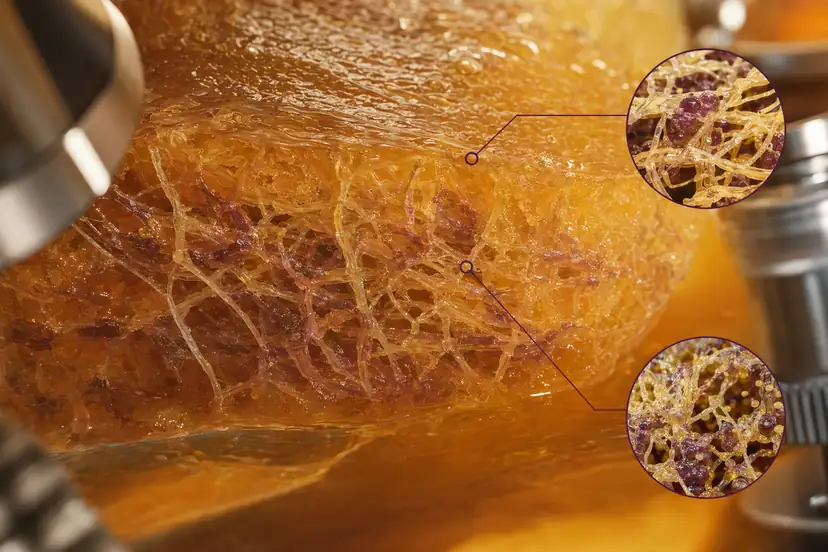
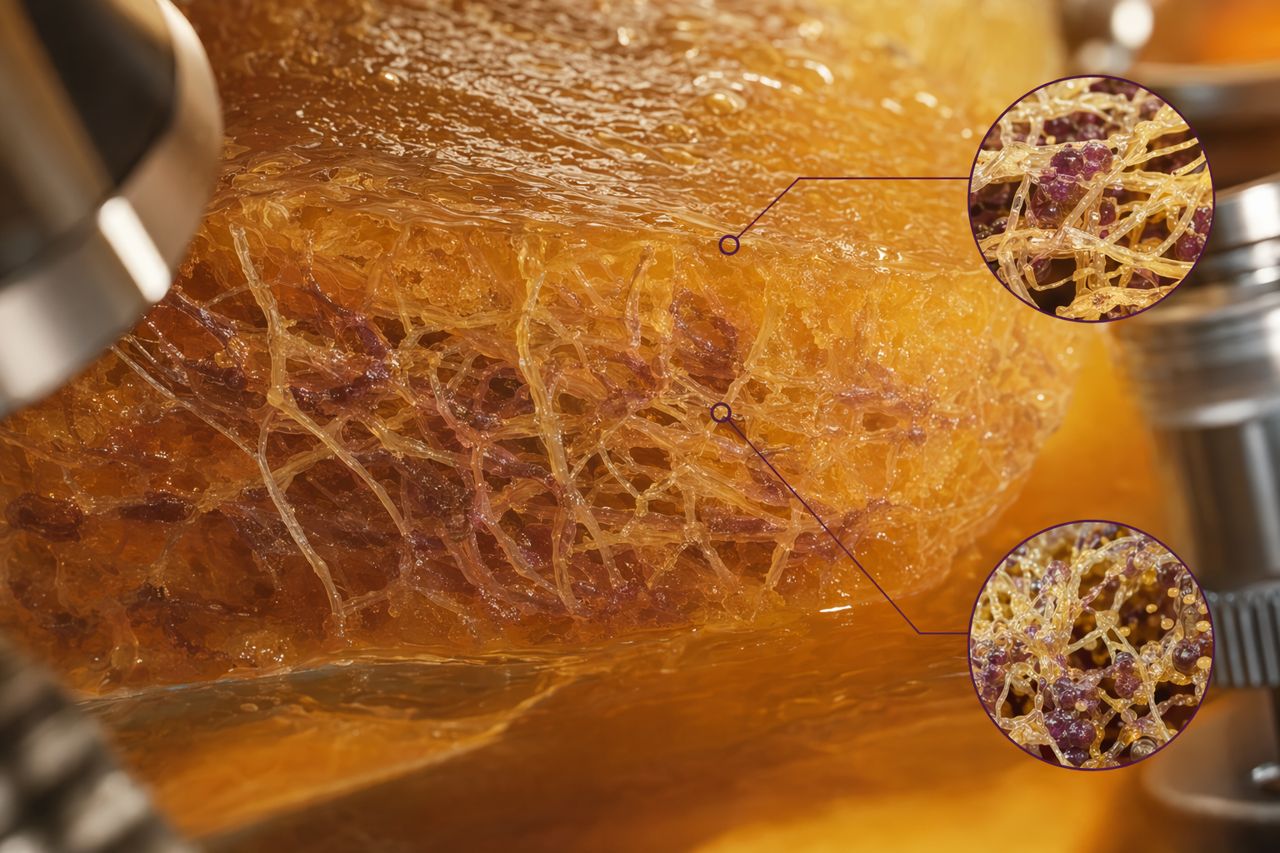
Pectinase is used when plant material behaves less like a liquid feedstream and more like a suspended gel. In fruit pulp, wine must, vegetable mash, botanical extracts, and ingredient slurries, pectin can hold water, bind suspended solids, slow pressing, and increase haze load. Pectinase reduces that structure by cutting and modifying pectin polymers in the middle lamella and primary cell wall.
For process teams, the value is not abstract enzymology. It is lower viscosity, faster release, cleaner separation, improved juice or extract recovery, and more predictable clarification.
At Pellucid Works, we describe pectinase by what it does in process: it opens plant tissue, collapses pectin-driven gel strength, and moves the stream toward a more pumpable, filterable, and clarifyable state.
What pectin is doing in the raw material
Pectin is a family of complex polysaccharides found in plant cell walls. Its structure varies by crop, maturity, storage history, and thermal exposure, but it commonly includes galacturonic acid-rich regions that can be methyl-esterified, branched, crosslinked, or associated with other wall components.
Stabilize fine suspended particles and colloidal haze
Reduce free-run yield and press efficiency
Increase centrifuge, membrane, and filter loading
Create batch-to-batch variation when raw material changes
This is why the same pectinase strategy may not perform identically across apple, berry, citrus, grape, tropical fruit, vegetable, or botanical substrates. The enzyme system must match the pectin structure and the processing goal.
The pectinase mechanism in plain process language
Pectinase does not simply “dissolve fruit.” It targets the pectin network that helps hold plant cells together and contributes to gel-like behavior.
1. The enzyme reaches hydrated pectin regions
Pectinase activity begins where the pectin is accessible. Mechanical milling, crushing, maceration, temperature profile, and water availability all influence how much substrate surface the enzyme can reach. If the feed is poorly hydrated or the pulp structure is too intact, the reaction can be limited by access rather than by enzyme selection.
2. Pectinolytic enzymes attack specific bonds
Commercial pectinase preparations are often pectinolytic systems, not a single uniform action. Depending on the formulation, they may include enzymes that cleave the pectin backbone, act on esterified regions, or help reduce the size and structuring power of pectin fragments.
Common functional roles include:
Polygalacturonase-type action: cleaves galacturonic acid-rich pectin chains, reducing polymer length and gel contribution.
Pectin lyase-type action: breaks pectin chains in methyl-esterified regions, often useful where pectin remains highly esterified.
Pectin methylesterase-type action: removes methyl ester groups, changing the charge and reactivity of the pectin and making certain regions more accessible to other pectinolytic actions.
Accessory hemicellulase or cellulase-side activities, when present: can assist tissue opening, depending on the raw material and intended specification.
The exact balance matters. A beverage clarification operation may prioritize haze reduction and filtration behavior. A mash treatment may prioritize tissue breakdown and yield. An ingredient manufacturer may prioritize controlled viscosity reduction without excessive degradation of desired texture or solids profile.
3. The network loses molecular length and structure
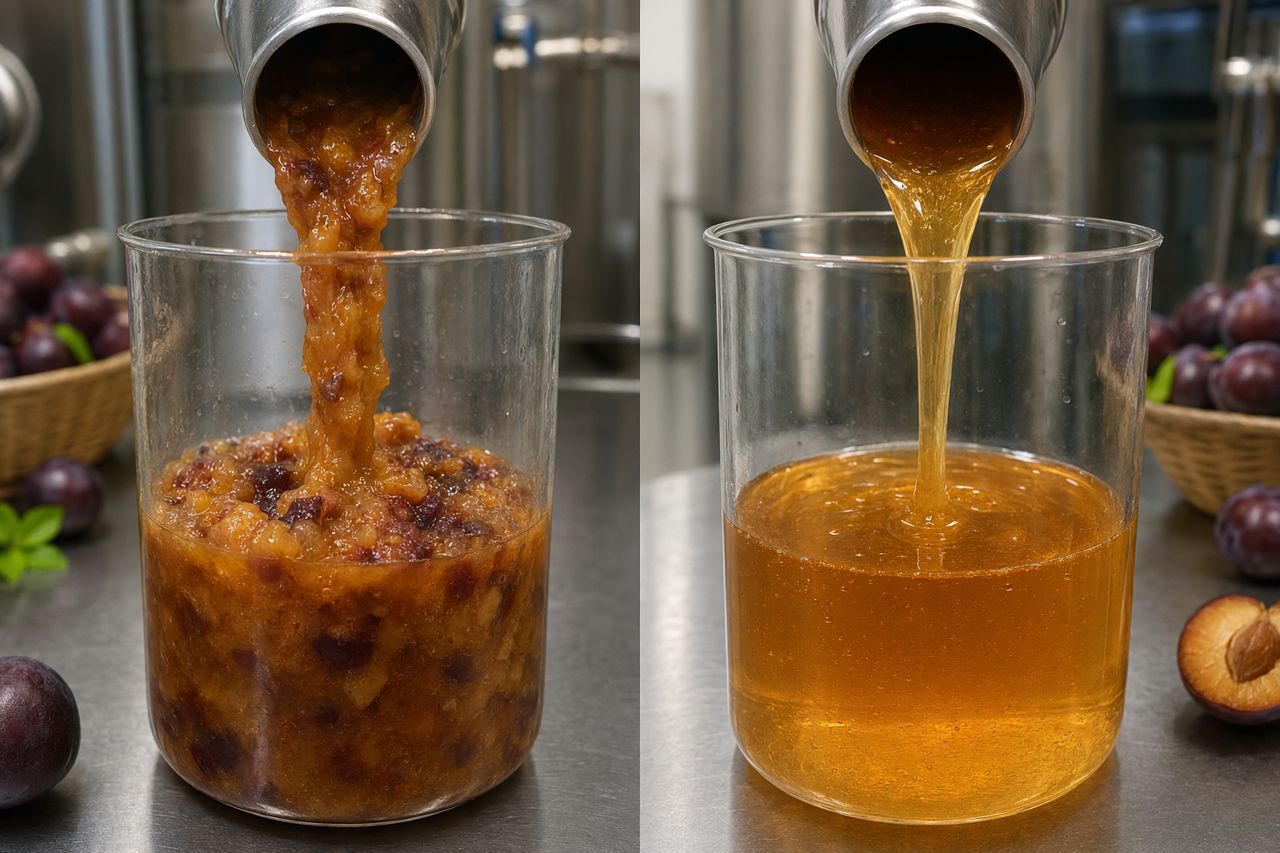
As pectin chains are cut or modified, the original high-molecular network loses its ability to hold water and suspend fines. Long tangled structures become shorter fragments. The result is a measurable process shift: the pulp becomes less resistant to flow, the press cake drains more readily, and suspended material is easier to separate.
4. Liquids release from plant tissue
Pectin sits in the middle lamella, where it helps cement neighboring plant cells together. When pectinase weakens this structure, juice or extract trapped inside tissue can move into the bulk liquid phase. In practical terms, this can improve free-run release, press performance, extraction efficiency, and downstream recovery.
5. Clarification becomes easier to manage
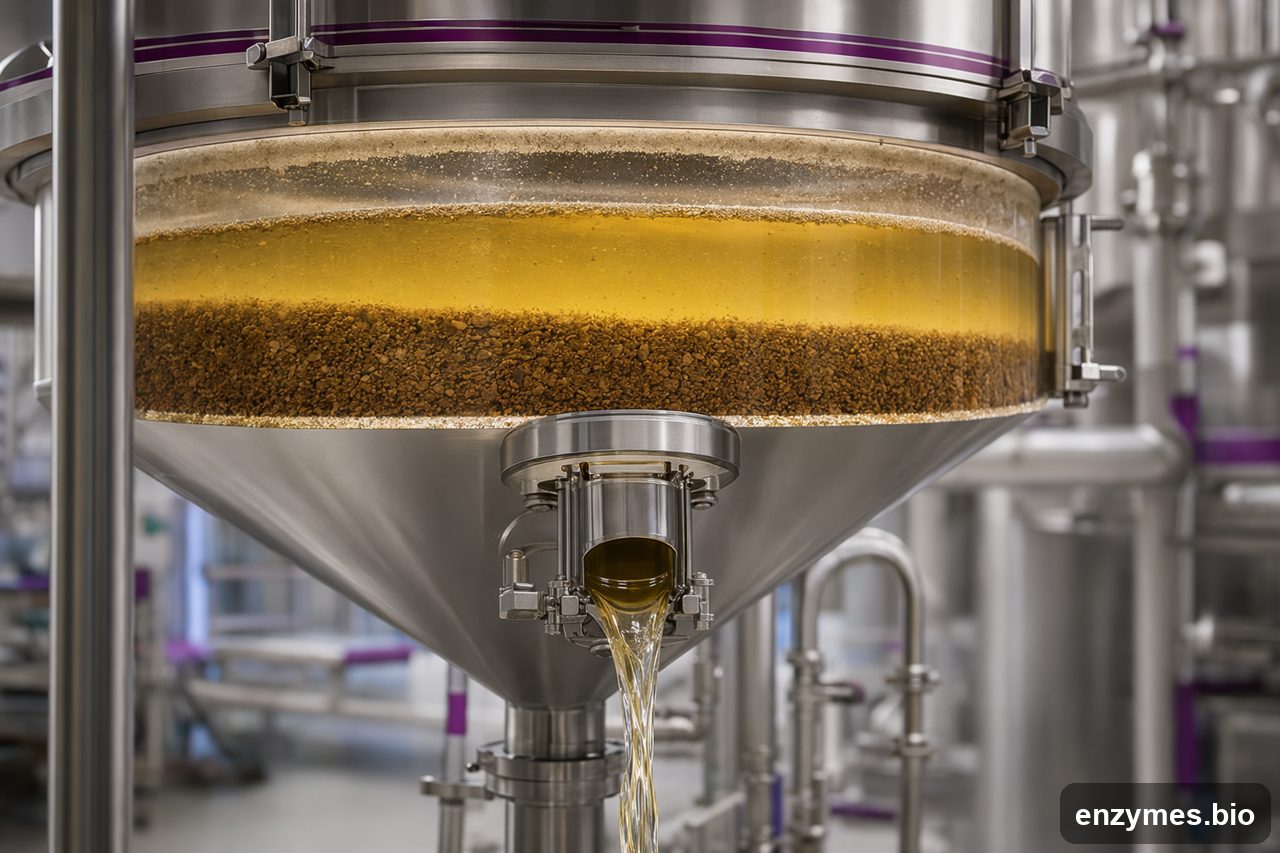
Pectin can stabilize haze by keeping colloidal material suspended. When the pectin network is reduced, particles can agglomerate more effectively, settle more predictably, or respond better to centrifugation and filtration. The goal is not only visual clarity. The goal is a feedstream that behaves consistently through the separation train.
Where pectinase creates value in industrial processing
Pectinase is selected when pectin is limiting yield, viscosity, clarity, or separation capacity. Typical B2B use cases include:
Juice and fruit processing
Apple, pear, berry, stone fruit, tropical fruit, and blended juice lines
Mash treatment before pressing
Viscosity reduction before decanter or membrane steps
Haze control and clarification support
Improved release of soluble fruit components
Wine and grape processing
Grape maceration and must treatment
Press yield improvement
Color and phenolic extraction support, depending on style and process conditions
Settling and clarification support before downstream operations
Ingredient and extract manufacturing
Fruit and vegetable concentrates
Botanical extracts
Purees and pulps where controlled viscosity reduction is required
Release of soluble fractions before concentration, fermentation, or further conversion
Improved handling of high-solids plant biomass
Process variables that change pectinase performance
Pectinase performance depends on the raw material and the process window. Before selecting or scaling a pectinase, technical teams usually evaluate the following variables.
Substrate type and pectin profile
Different crops carry different pectin architectures. Citrus peel, apple pomace, berry mash, and grape must may all contain pectin, but their degree of esterification, branching, and association with other wall polymers can differ significantly.
Particle size and tissue opening
Crushing or milling changes enzyme access. A smaller particle size can expose more surface area, but overly aggressive size reduction may increase fine solids load and create separation challenges. The best point is usually a balance between enzyme access and downstream filterability.
Temperature window
Temperature affects both enzyme reaction speed and raw material behavior. It also interacts with microbial control, aroma retention, color management, and thermal history. Pectinase selection should fit the plant’s actual process temperature rather than an idealized lab condition.
pH window
Pectinase performance changes across pH conditions. Fruit, grape, vegetable, and botanical streams vary naturally, and pH can shift during blending, extraction, or concentration. The enzyme should be chosen for the working pH of the stream.
Contact time and mixing
Pectinase needs contact with accessible substrate. Mixing must distribute enzyme through the pulp or liquid without creating unwanted air incorporation, shear damage, or operational bottlenecks. Contact time should be aligned with the plant’s holding capacity and throughput goals.
Heat history
Blanching, pasteurization, hot break, and concentration steps can change pectin accessibility and viscosity behavior. In some processes, enzyme treatment must happen before a heat step; in others, it is designed into a controlled pre-treatment stage.
What “good breakdown” looks like in plant operation
A successful pectinase trial should be judged by process outputs, not by enzyme label language alone. Useful indicators include:
Lower apparent viscosity in mash, juice, extract, or slurry
Faster free-run drainage
Improved press throughput or reduced residual liquid in press cake
Better centrifuge behavior or clearer separator overflow
Lower filter pressure rise during a defined run
Reduced haze persistence after settling or clarification
More consistent performance across raw material lots
Better compatibility with the next unit operation
The right result depends on the objective. For some buyers, the priority is maximum yield. For others, it is filtration economy, clarity, throughput, or repeatability under seasonal raw material variation.
Pectinase is often a formulation decision, not just an enzyme decision
Many industrial pectinase applications benefit from a blend architecture. The pectin network may require more than one catalytic action, and the surrounding cell wall matrix may affect access. However, more side activity is not always better.
A good formulation decision considers:
Target crop or substrate
Whether the stream is pulp, mash, must, juice, extract, or concentrate
Desired level of viscosity reduction
Clarification target
Downstream equipment sensitivity
Labeling, regulatory, and processing requirements
Whether texture, mouthfeel, color, or solids profile must be preserved
Pellucid Works frames pectinase selection around the process endpoint first, then the enzyme architecture. That keeps trials focused and reduces the risk of choosing a preparation that performs in a generic test but underdelivers on the plant floor.
Common buyer questions
Is pectinase only for clarification?
No. Clarification is a major use, but pectinase also supports mash liquefaction, press yield, extraction, viscosity reduction, and separation efficiency. The same mechanism—pectin network reduction—can serve different unit operations.
Can pectinase improve yield?
Yes, when pectin is restricting liquid release from plant tissue or increasing press cake retention. Yield gains depend on substrate, mechanical preparation, contact conditions, and downstream recovery design.
Will pectinase always reduce haze?
Not automatically. If haze is pectin-stabilized, pectinase can help. If haze is dominated by proteins, starch, tannin complexes, mineral interactions, or fine insoluble solids, pectinase may need to be combined with other process controls.
Can pectinase be used before filtration?
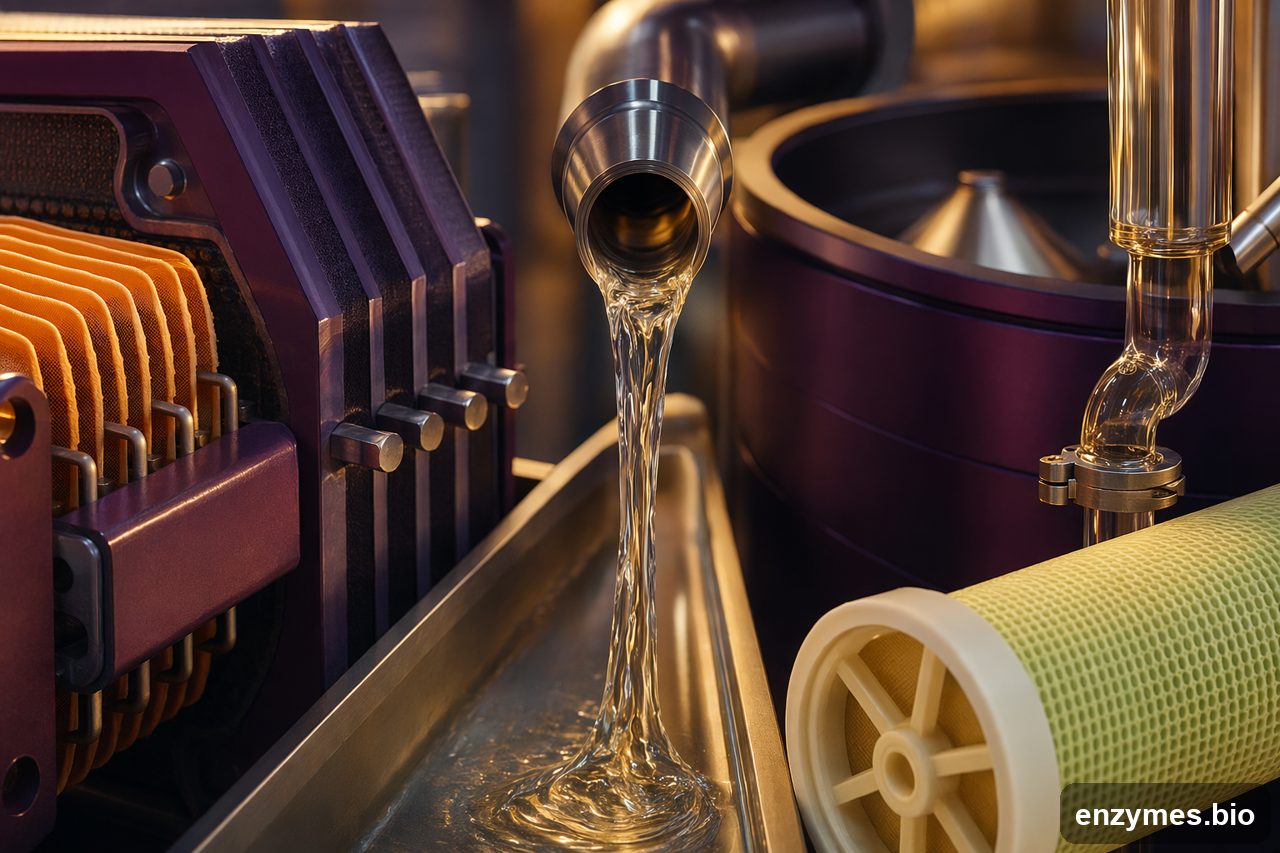
Often, yes. Pre-filtration pectinase treatment can reduce pectin-driven fouling and pressure rise. The treatment must be validated against the specific filter, membrane, solids load, and product specification.
Is one pectinase suitable for every fruit or botanical?
Usually not. Pectin composition changes by source material and season. Industrial buyers should test against representative feedstocks and define the decision by process performance, not a generic substrate claim.
How to evaluate pectinase for a production line
A practical evaluation should compare treated and untreated material under the same plant-relevant conditions. Focus on the metrics that affect cost and capacity.
Recommended evaluation structure:
Define the process constraint: viscosity, yield, press time, haze, filtration, centrifuge loading, or extraction efficiency.
Use representative raw material, including challenging seasonal lots if available.
Hold mechanical preparation, temperature, pH, and contact time constant across comparisons.
Measure process outcomes at the next unit operation, not only in a beaker.
Confirm that the treated stream still meets product specifications for color, flavor, solids, clarity, texture, and downstream compatibility.
Validate at pilot or production scale before locking the enzyme strategy.
Specify pectinase by outcome
For procurement and R&D teams, the strongest pectinase specification begins with the process problem:
“Reduce apple mash viscosity before pressing.”
“Improve berry juice clarification before filtration.”
“Support grape must settling while preserving intended style.”
“Increase extract recovery from botanical slurry.”
“Improve separation behavior in a high-solids fruit side-stream.”
Once the endpoint is clear, enzyme selection can be narrowed to the pectinolytic profile, process window, and formulation constraints that matter.
Request pectinase pricing or technical fit guidance
If you are evaluating pectinase for juice, wine, ingredient, extract, or plant side-stream processing, Pellucid Works can help frame the trial around your real process constraint.
Pellucid Works will respond through this site’s own contact workflow with pricing direction, availability, and technical fit questions for your application.