Pellucid Works supplies pectinase for pectin-rich plant biomass processing, supporting separation, drainage, extraction, dewatering, and fiber handling in industrial workflows.
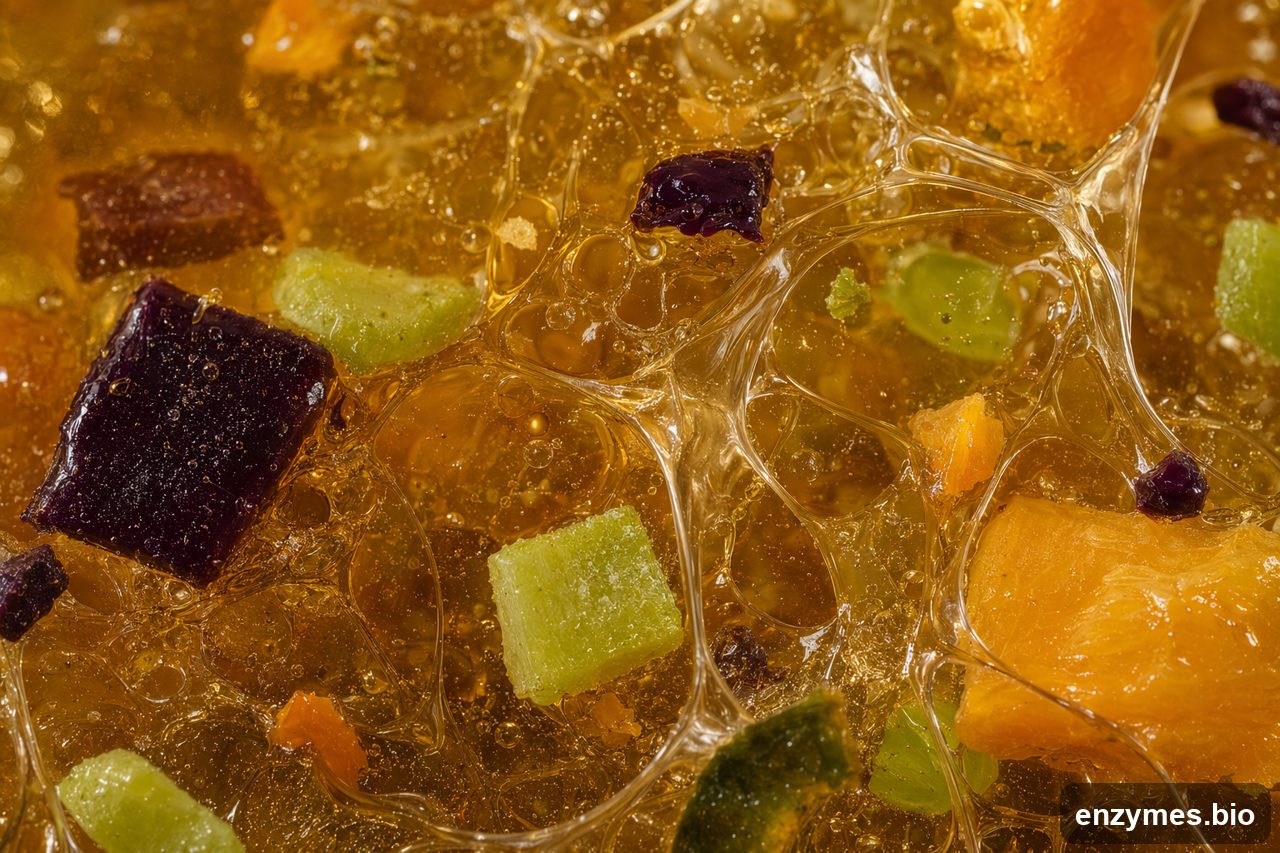
Plant materials that carry high pectin content can behave like a gel: they hold water, bind fine solids, slow drainage, and complicate mechanical separation. Pellucid Works supplies Pectinase (Pectinolytic Enzyme) for industrial teams that need controlled modification of pectin-rich biomass before pressing, extraction, filtration, dewatering, or fiber conversion.
Pectinase helps reduce the structural grip of pectin within fruit, vegetable, leaf, and agricultural co-product matrices. The result is a more processable slurry, mash, pulp, or fiber stream — with better release, cleaner separation behavior, and fewer downstream bottlenecks.
Built for industrial processing teams
This application is relevant for formulation groups, process engineers, toll processors, ingredient manufacturers, and biomass handlers working with plant-derived materials such as:
Fruit and vegetable pulps
Citrus, apple, grape, berry, and tropical fruit residues
Press cakes and extraction by-products
Pectin-containing agricultural co-products
Plant fiber streams requiring improved drainage or handling
Botanical extraction feedstocks
Wet biomass prepared for further enzyme or mechanical treatment
What pectinase changes in the process
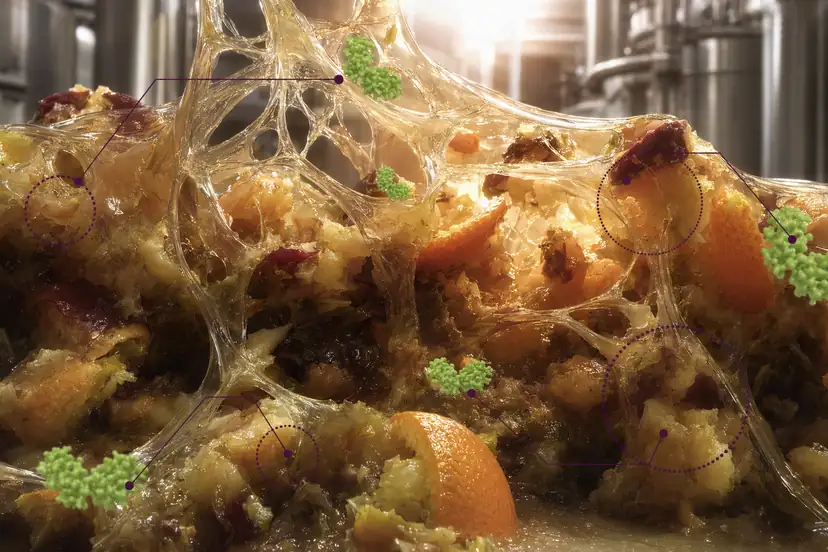
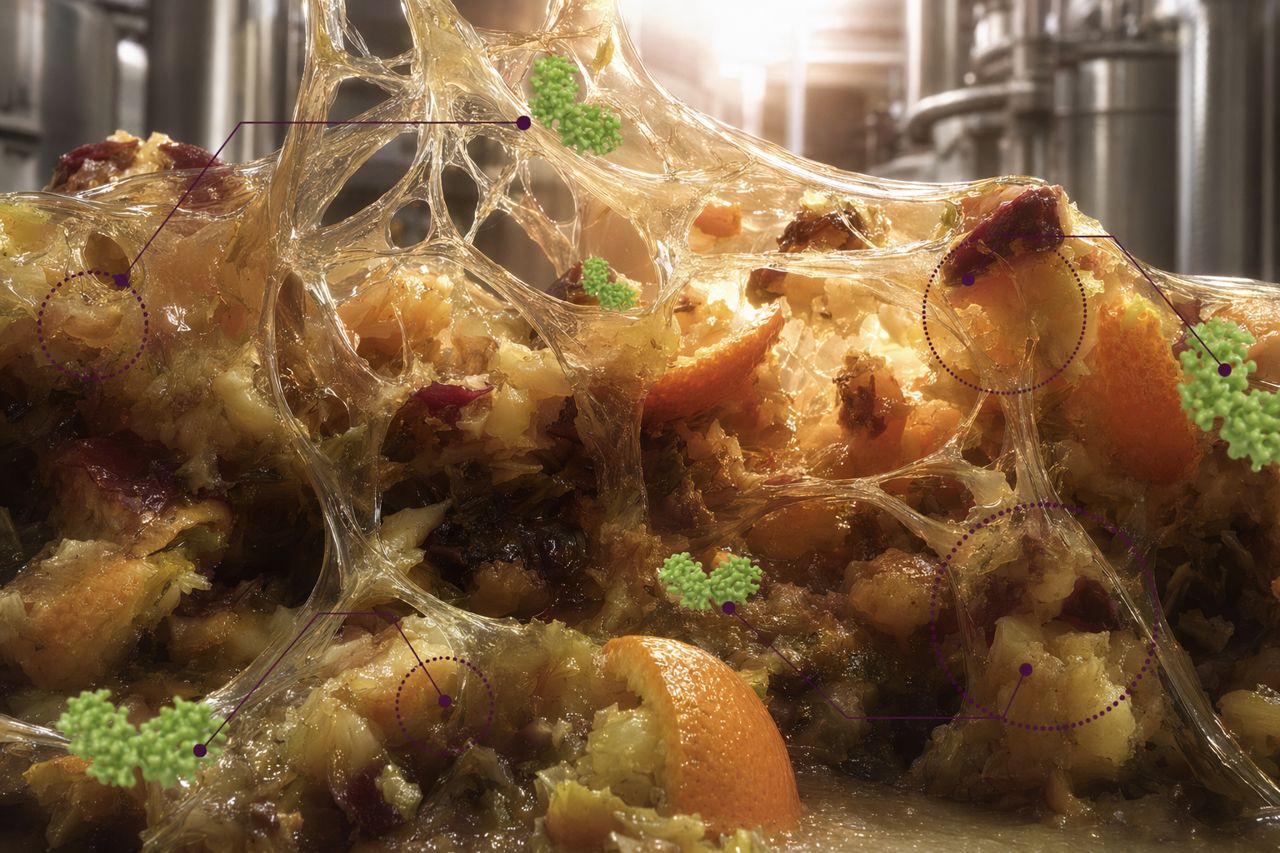
Pectin acts as a natural adhesive and water-binding network in many plant tissues. In processing, that network can create viscosity, cling, suspended fines, poor liquid release, and slow filtration. Pectinase targets that pectin structure so the material behaves less like a gel and more like a manageable process stream.
Typical process benefits
Improved liquid release during pressing, maceration, or extraction
Reduced viscosity in pectin-rich slurries and mashes
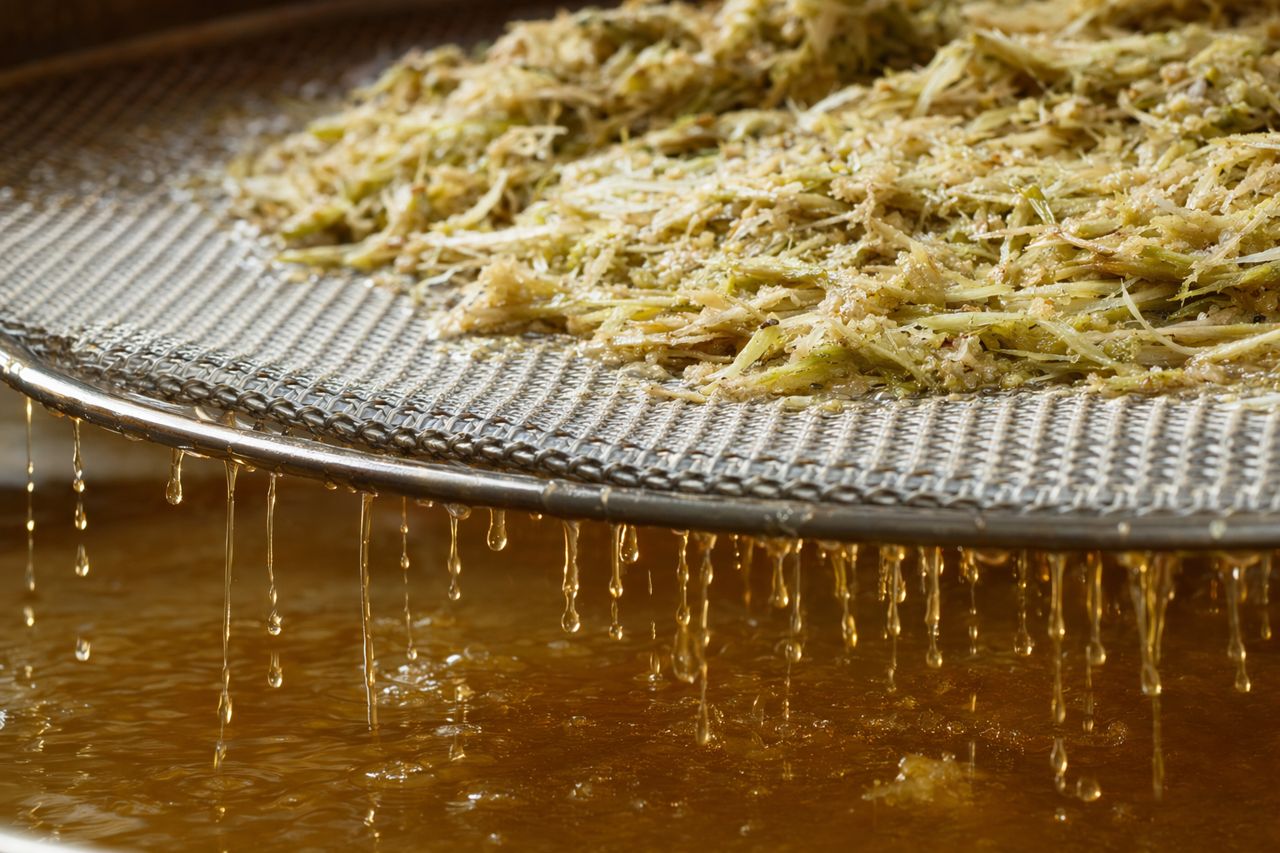
Better drainage and dewatering behavior in wet fiber handling
Cleaner separation between liquid, soluble solids, and insoluble fiber
Improved access to trapped soluble material in plant cell-wall matrices
Lower mechanical resistance during pumping, mixing, or pressing
More consistent feed behavior before filtration, centrifugation, or drying
Where pectinase fits
Pectinase is commonly introduced before a physical separation step, where weakening the pectin network can make the following operation more efficient.
Common integration points
Pre-press conditioning
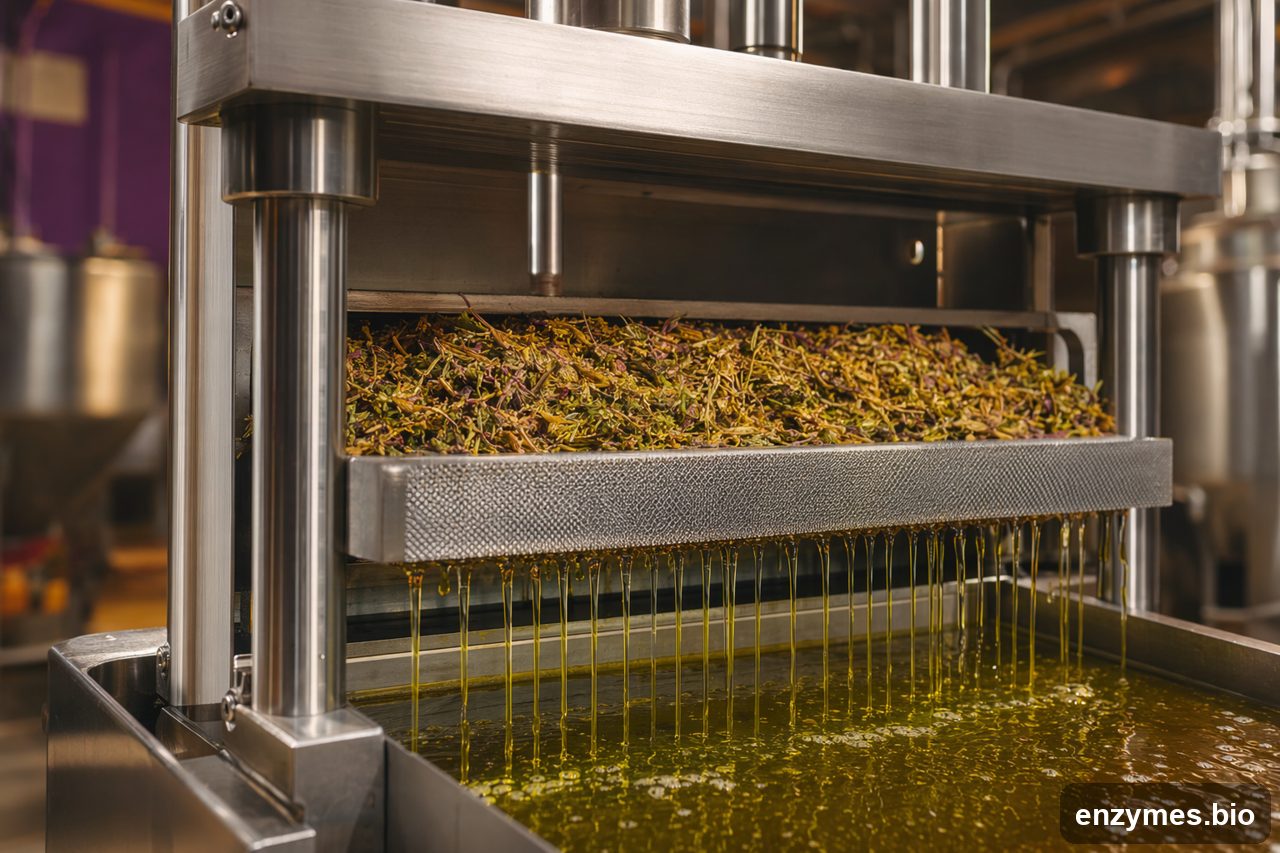
Added to crushed, milled, or macerated plant material to improve juice, extract, or liquid release.
Slurry viscosity management
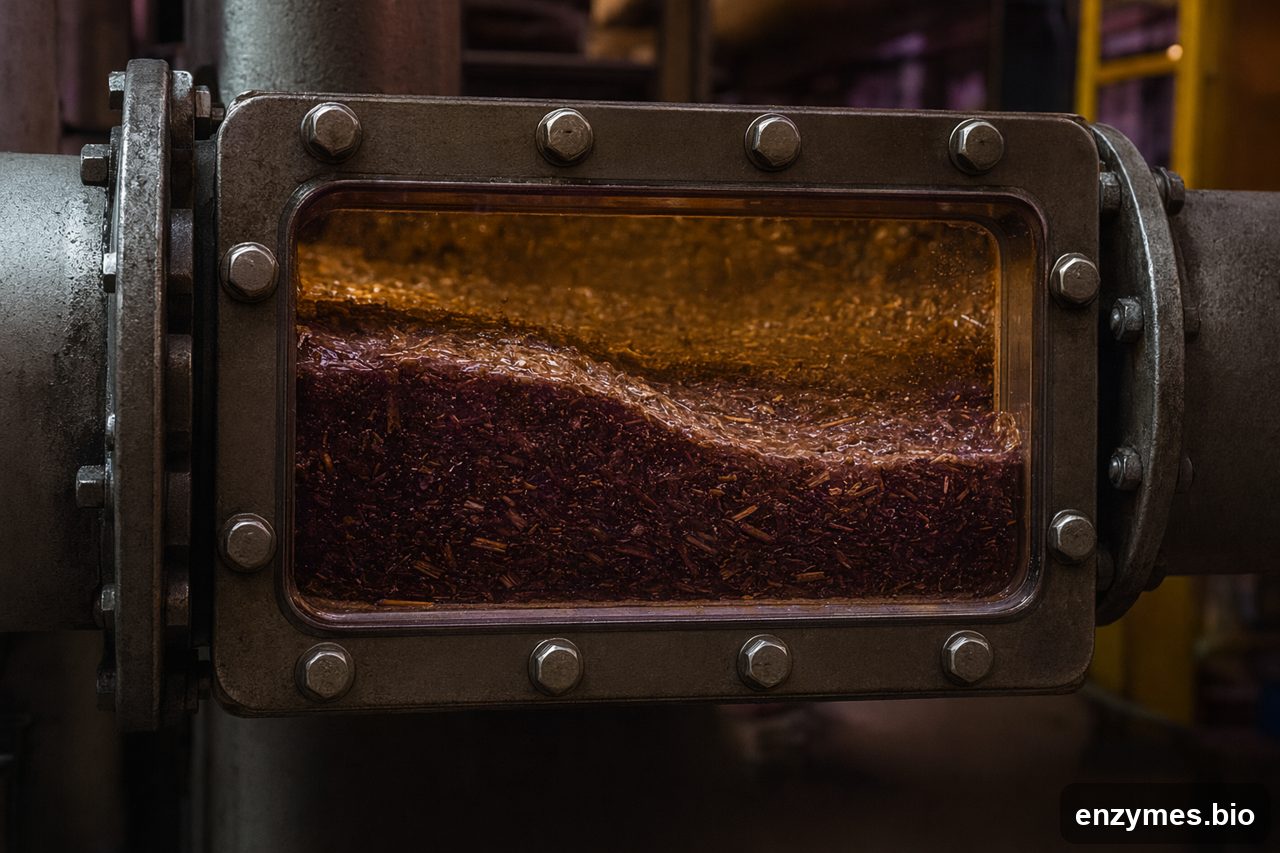
Used where pectin-rich biomass becomes thick, stringy, or difficult to pump.
Drainage and dewatering support
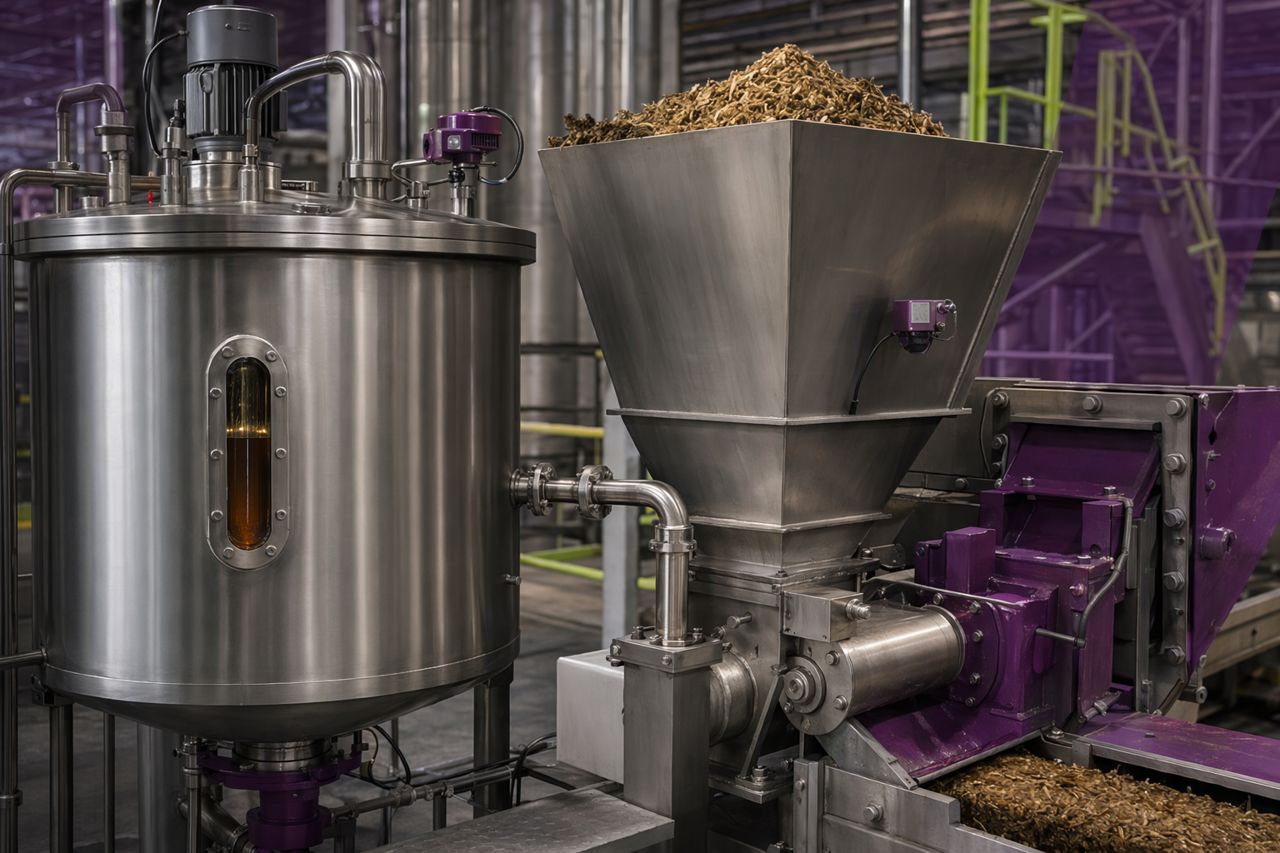
Applied before belt pressing, screw pressing, screening, or other solid-liquid separation steps.
Extraction support
Used in botanical, fruit, vegetable, and co-product extraction workflows to improve exposure of soluble fractions.
Fiber handling modification
Used when pectin contributes to clumping, poor flow, water retention, or inconsistent fiber behavior.
Process fit and handling considerations
Pectinase performance depends on the substrate, solids loading, contact time, mixing quality, temperature profile, and acidity of the process stream. For most industrial evaluations, the best starting point is a controlled pilot trial using the actual biomass and the intended downstream equipment.
Useful operating questions
Before selecting a pectinase format, our team typically asks:
What plant material is being processed?
Is the goal liquid release, viscosity reduction, drainage, extraction, fiber modification, or filtration support?
Is the substrate fresh, cooked, dried, milled, pressed, fermented, or chemically conditioned?
Where will the enzyme be added in the line?
What equipment follows enzyme treatment?
Are there constraints around acidity, heat exposure, hold time, or preservative systems?
Is the desired outcome yield improvement, throughput, cleaner separation, or more stable handling?
These details help define a practical recommendation without over-treating the material or disrupting downstream specifications.
Application examples
Fruit and vegetable co-products
Pectinase can help processors unlock liquid and soluble material from peel, pomace, pulp, and press cake streams. This can support valorization programs where by-products are converted into extracts, concentrates, animal feed ingredients, fermentation substrates, or fiber fractions.
Botanical and plant extract manufacturing
In botanical extraction, pectin-rich tissue can trap valuable soluble material and slow clarification. Pectinase can support matrix opening before extraction or separation, improving process access while reducing gel-like behavior.
Wet fiber and pulp handling
Some plant fiber streams retain water because pectin holds the structure together. Pectinase can help modify this binding behavior, supporting drainage, pressing, and more uniform handling before drying or blending.
Biomass pretreatment sequences
Pectinase may be used as one step in a broader plant biomass pretreatment strategy alongside mechanical size reduction, thermal conditioning, or other enzyme classes. In these systems, it is typically selected for its ability to reduce pectin-related resistance rather than to fully hydrolyze the total plant cell wall.
Why Pellucid Works
Pellucid Works focuses on process clarity: matching the enzyme to the material, the operating window, and the downstream goal. For plant biomass and fiber processing, we help buyers evaluate pectinase as a practical tool for reducing pectin-driven friction in the line.
You get direct, technical commercial support for:
Application scoping
Grade and format selection
Trial planning
Scale-up questions
Packaging and supply planning
Documentation review for industrial procurement
Request pricing or technical fit guidance
Tell us what biomass you are processing, the current bottleneck, and the downstream operation you need to improve. We will respond with pectinase options and practical next steps.
Prefer a shorter note? Use the same form to get pricing and include the material, process step, and target outcome.